
Eating Alone in Korea: Menus, Barbecue and Minimum Orders
From a roll of gimbap or a bowl of sundaeguk to barbecue and shared stews, here is how to understand portions and minimum orders when dining alone in Korea.
FLASH KOREA · 2026-10-17
Eating alone in Korea: wondering about these things?
Questions about eating alone in Korea turn up in international travel communities: can you walk into a barbecue restaurant on your own? Why does a menu list a price for one serving when you have to order two?
FLASH KOREA will help you make sense of it. We will start with dishes that are easy to order for one, such as a roll of gimbap or a bowl of sundaeguk, then look at tabletop barbecue and shared stews and hot pots.
Eating alone is called honbap (혼밥) in Korean. Rules vary by restaurant, so check whether they can seat one guest, then the minimum amount of food you must order. Seating and order size are separate conditions.
Three menu expressions to tell apart
- 1인분 — One serving: a portion or pricing unit.
Check separately whether you can order just one serving. - 2인분 이상 주문 — Order at least two servings.
Ask whether a solo guest may dine there by ordering those two servings. - 1인 1메뉴 — One menu item per guest.
Check which dishes qualify and any additional conditions.
“One serving” does not automatically mean you can dine alone and order only that amount. Do not judge the total cost from the food in a photograph.
Start with a roll of gimbap or a bowl of sundaeguk
Dishes sold by the roll or bowl are a useful place to start.
- Gimbap (김밥): usually ordered by the roll. Check whether the price is for a basic roll or a version with different fillings.
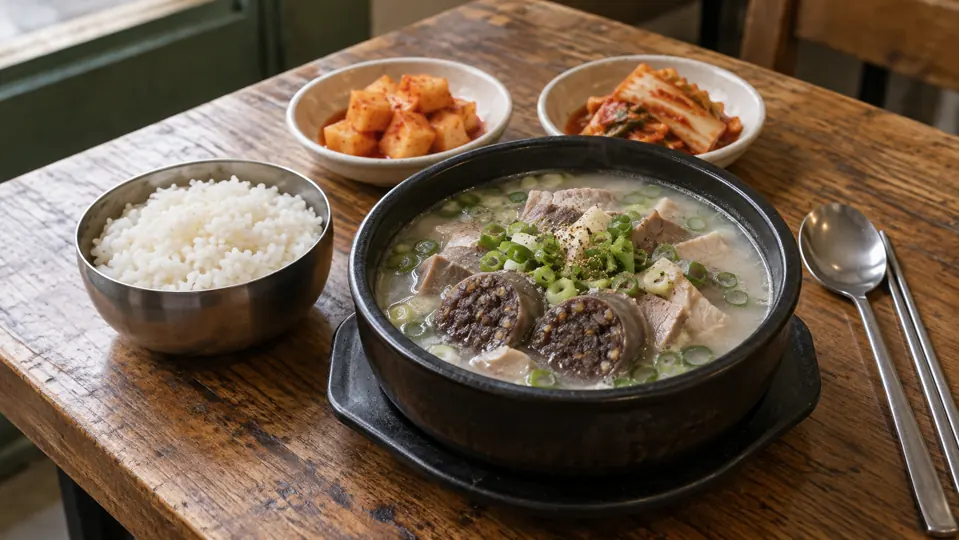
- Sundaeguk / sundaegukbap (순대국·순대국밥): usually a bowl for one. This soup contains Korean blood sausage and pork, among other ingredients. Rice may come separately or in the soup, depending on the restaurant.
- Gukbap, seolleongtang and gomtang (국밥·설렁탕·곰탕): generally meals ordered by the bowl.
- Bibimbap, kalguksu and naengmyeon (비빔밥·칼국수·냉면): useful individual-meal options, although some restaurants set their own minimum orders.
A roll of gimbap and a bowl of sundaeguk are both convenient solo orders, but their size and contents differ. Check the unit on the menu and whether rice is included. For vegetarian requirements or allergies, ask about broth and sauce ingredients too.
Grilled meat often starts with a two-serving order
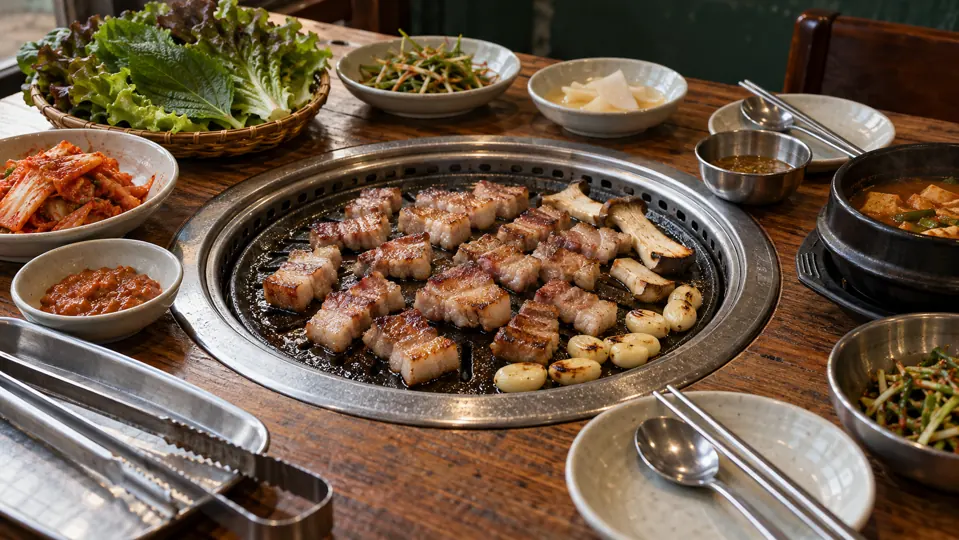
For pork belly or beef cooked on a tabletop grill, many restaurants require at least two servings in the first order. A price listed per serving does not mean the initial order can be just one.
Here, “two servings” usually refers to the quantity of meat you must order. Ask separately whether a solo guest ordering two servings can dine there. Meeting the minimum does not guarantee admission on your own everywhere.
- What is the minimum first order? Check the number of servings required.
- Can I mix different cuts? Ask whether you must order two servings of the same meat or may choose one serving each of different cuts.
- How many grams are in a serving? Weight varies by restaurant and cut; serving counts alone do not tell you the quantity.
- Are rice and stew included? Check whether they come with the meat or cost extra.
If two servings feel too much, look for an individual barbecue set or a lunch meal. Lunch and dinner ordering rules can differ.
Check whether a stew is individual or shared
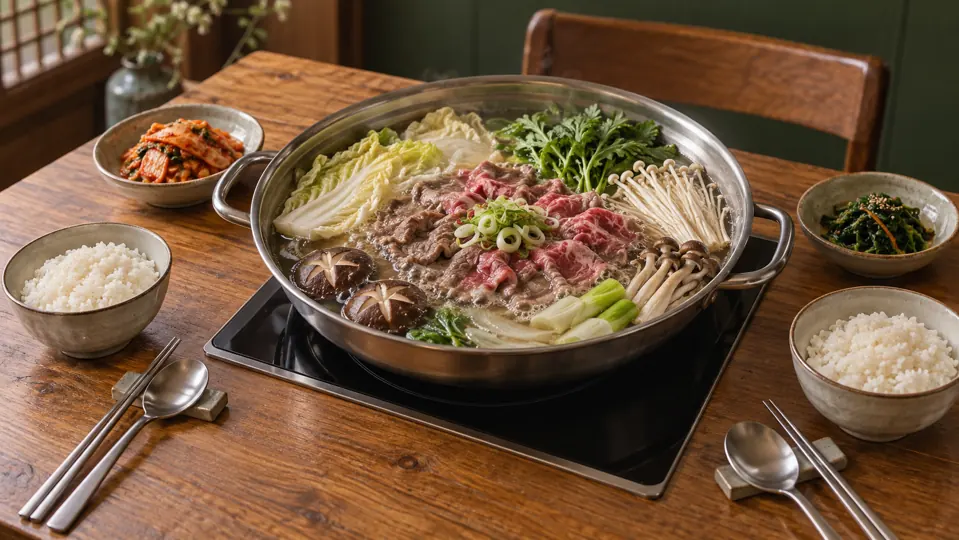
Dishes such as budaejjigae and gopchangjeongol, cooked together in a large pot at the table, also often require at least two servings. As with barbecue, the menu may show a per-serving price even when the actual minimum is two.
Some are sold as small, medium or large (소·중·대) rather than by serving. “Small” means a smaller pot, not necessarily a meal for one. Ask how many people it serves and whether rice is included.
Not every jjigae has a two-serving minimum. Sundubu, kimchi or doenjang jjigae served in a small earthenware bowl or individual pot may be available as a meal for one. Rather than relying on the word “stew”, check whether it is an individual dish or a shared pot.
Show the staff: 이 찌개는 혼자 먹을 수 있는 1인분 메뉴인가요? — Is this stew an individual meal for one? Or 이 전골은 최소 몇 인분부터 주문하나요? — What is the minimum number of servings for this hot pot?
Show these questions to the staff
- 혼자 식사 가능한가요? — Can I dine here on my own?
- 이 메뉴는 1인분만 주문할 수 있나요? — Can I order just one serving of this dish?
- 최소 몇 인분 주문해야 하나요? — What is the minimum number of servings?
- 밥은 별도인가요? — Is rice charged separately?
- 포장 가능한가요? — Is takeaway available?
Point to the dish while showing the question so the staff know which item you mean.
From finding a restaurant to paying
Search a map app for 혼밥 or 1인 식사 to find options. Photos and recent reviews are useful clues, not guarantees of current seating or order policies. Check break times and last orders as well as opening hours.
If reading a Korean menu is difficult, try a translation app’s camera feature. Double-check numbers, weights and minimum-order wording with the staff. Follow the restaurant’s ordering system, whether staff, kiosk or table device, and check where to pay and whether payment comes first. Do not assume every restaurant accepts your particular card or mobile payment method.
A meal can be part of the journey
Check the party-size policy before entering, then the minimum order and what is included before ordering. If one restaurant does not suit you, look for another meal in the same neighbourhood. Eating alone does not mean you have to rush every meal.
Minimum orders and seating policies vary by restaurant. This is a guide to understanding menus, not a first-hand review of a particular restaurant.
Sources and background
Last checked: 2026-10-17
Farmers’ markets in Korea: why we love Marche
Meet the seasons and the people behind the food. From Marche to Baro markets in Gwacheon and Daegu, add a market day to your time in Korea.
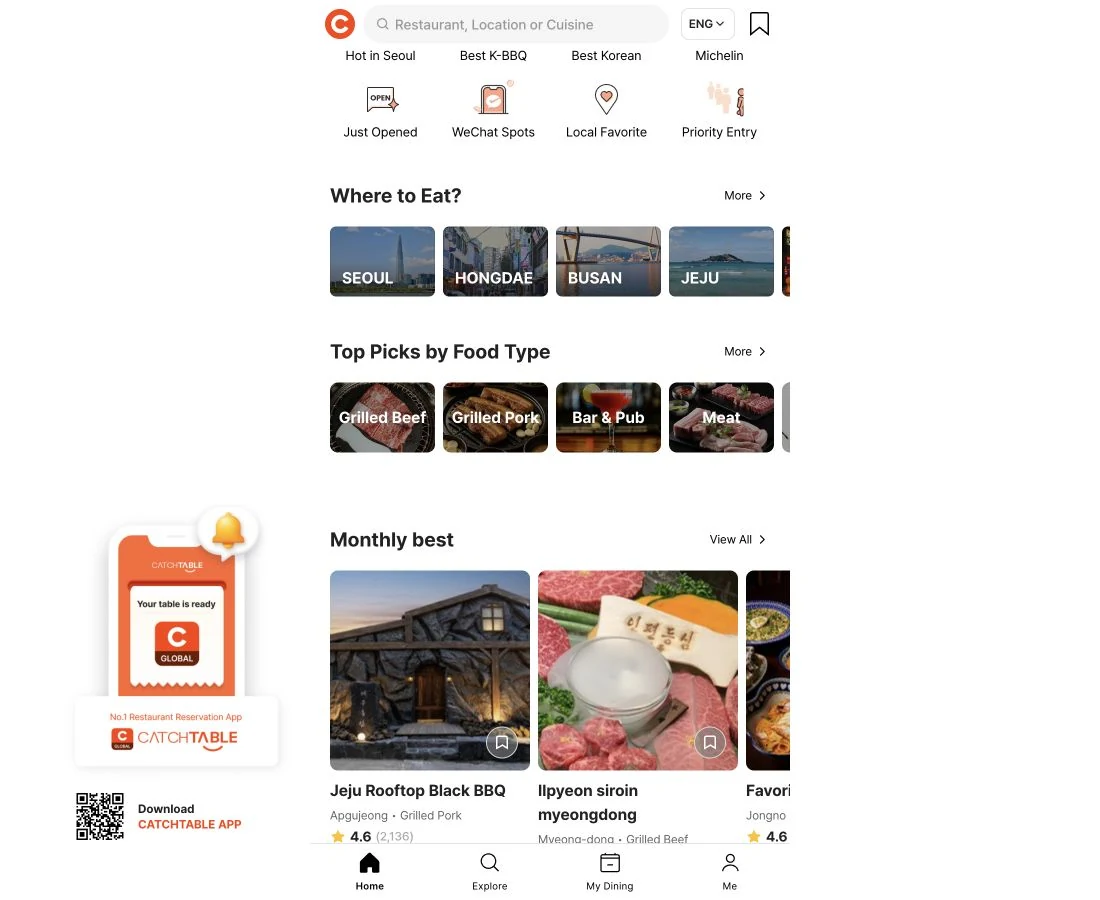
Booking Restaurants in Korea: CATCHTABLE and NAVER
“I really want to eat here—but how do I book?” You have options without a Korean phone number. From planning a special meal on CATCHTABLE to finding neighbourhood restaurants on NAVER, let’s walk through the English booking screens.
Seoul on a Rainy Day: 6 Indoor Activities & Cafés
Explore six rainy-day ideas in Seoul: museums, The Hyundai Seoul, Hongdae anime shops and Han River cafés, with opening hours, costs and transport tips.

Where to Buy 탱글 (Tangle) in Korea: A Small Souvenir to Take Home
Meet 탱글 (Tangle), the twistable fidget toy catching attention in Korea. Discover how it differs from 말랑이, where to look in Seoul and how to choose one as a travel souvenir.

Korean Profile Photos: Booking a Portrait Session in Seoul
Plan a Korean studio portrait, from choosing a style and booking to outfits, retouching, original files and receiving your photographs.

Photo Booths or Self-photo Studios in Korea? How to Choose
Compare Korean four-cut photo booths, self-service studios and photographer-led sessions, including bookings, digital files and prints.
Seoul with Kids: 4 Family Experiences to Plan Around
Choose from three children’s museums and a family photo session, with ages, locations, hours and booking details to help plan a day in Seoul.
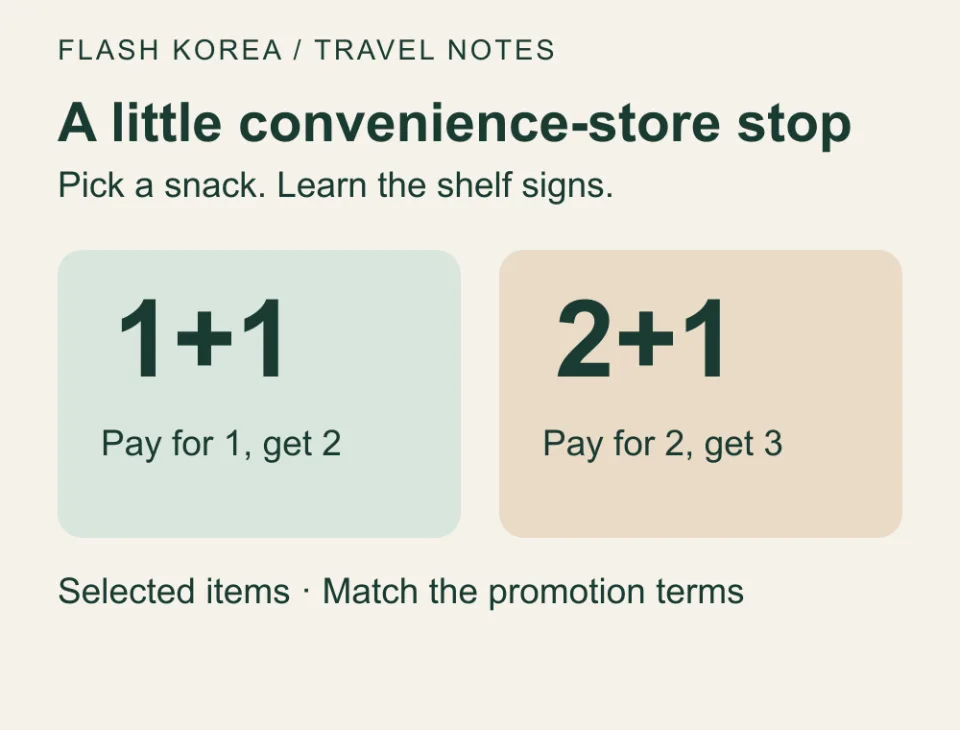
Korean Convenience Stores: Ramyeon, Snacks and 1+1 Deals
Learn how to prepare convenience-store ramyeon, choose snacks and triangle gimbap, and understand 1+1 offers, seating and cooking facilities.
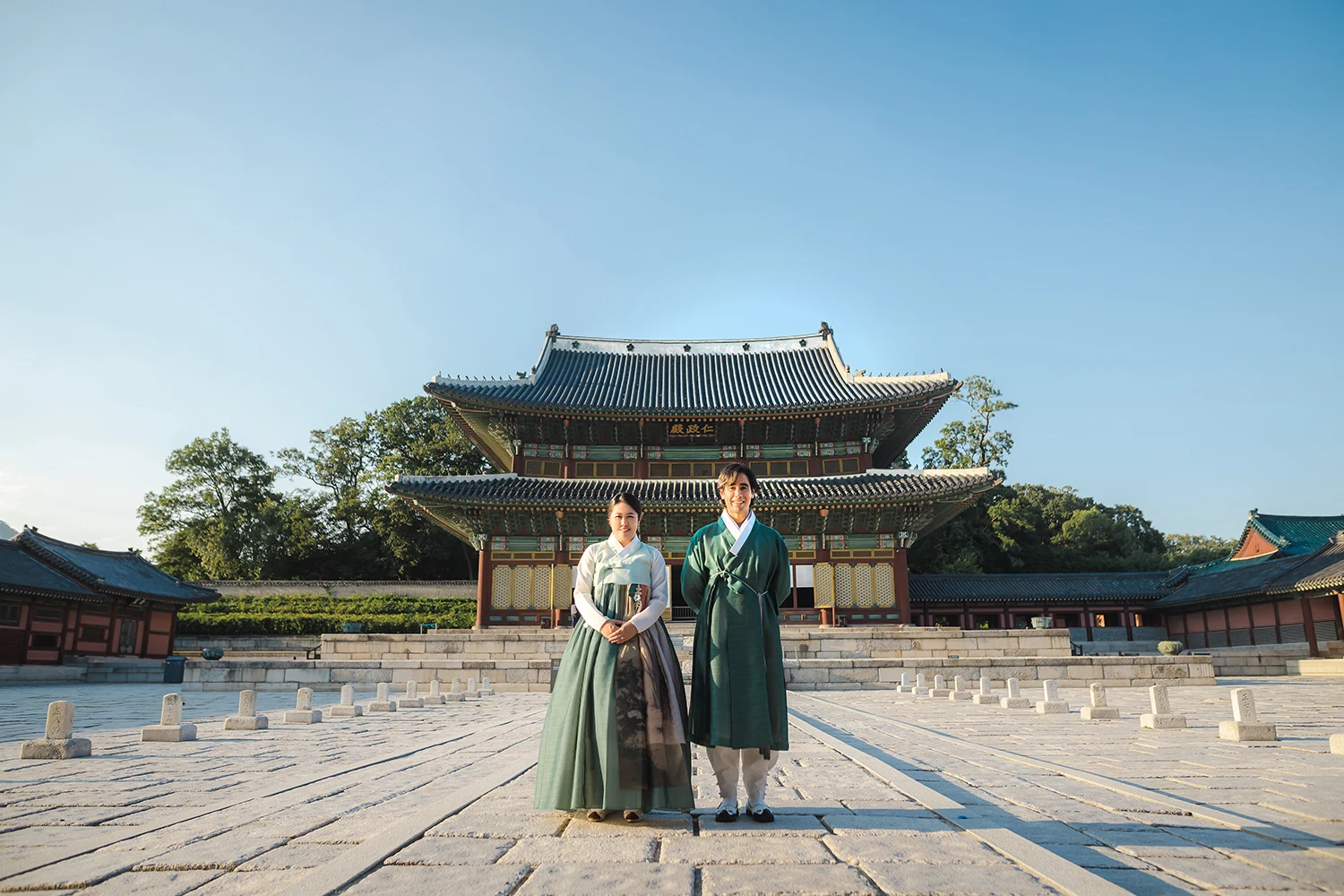
How to Find and Book a Photographer in Seoul
Plan a Seoul photo session: compare portfolios and quotes, agree locations, editing and file delivery, and clarify booking and image-use terms.
Seoul Palace Photos: Gyeongbokgung and Changdeokgung
Try portrait compositions at Geunjeongjeon, Gyeonghoeru, Injeongjeon and Nakseonjae, with practical guidance on light, clothing and visiting restrictions.
Food Souvenirs near Anguk: Seoul Donghaeng Sanghoe
Browse Korean regional foods and small gifts near Anguk Station. Add Seoul Donghaeng Sanghoe to a palace or Bukchon walk, with opening hours and market tips.
Your First Korean Jjimjilbang: Baths, Rest Areas and Payment
How to use a Korean jjimjilbang, from changing rooms and shared rest areas to extra charges, photography rules and visiting Aquafield Goyang.
Sungsimdang in Daejeon: Bread to Try, Branches and Queue Tips
Plan a first visit to Sungsimdang with bread suggestions, main-store and Cake Boutique hours, DCC location, queue advice and refrigerated-food tips.
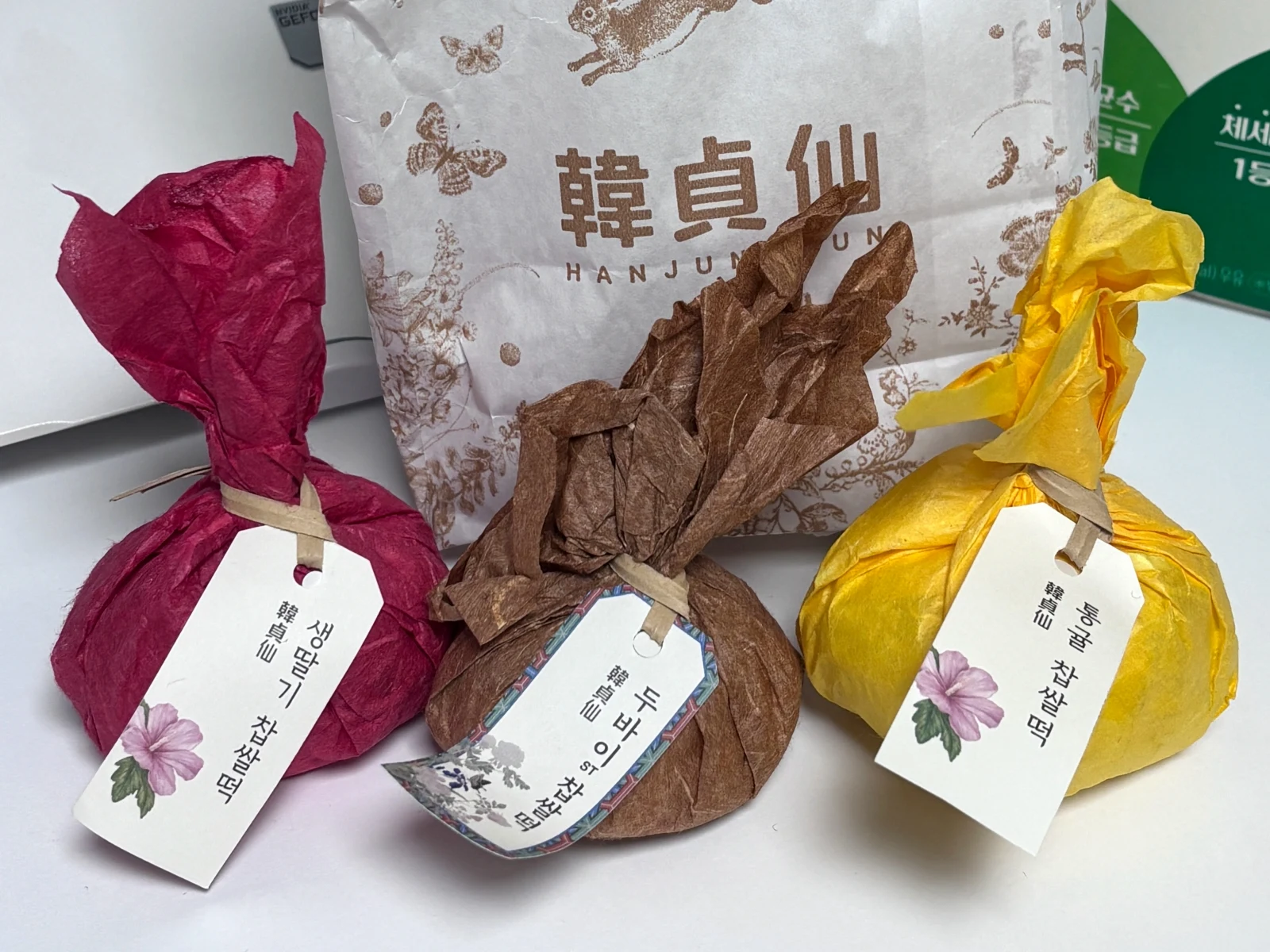
5 Snacks to Try in Korea: Fruit Rice Cakes, Dubai Chewy Cookies and More
Discover Hanjungsun fruit rice cakes, pizza seolgi, butter tteok, Dubai chewy cookies and salt bread, with ways to find shops and practical storage tips.