
Farmers’ markets in Korea: why we love Marche
Meet the seasons and the people behind the food. From Marche to Baro markets in Gwacheon and Daegu, add a market day to your time in Korea.
FLASH KOREA · 2026-10-16
Make room for a market day
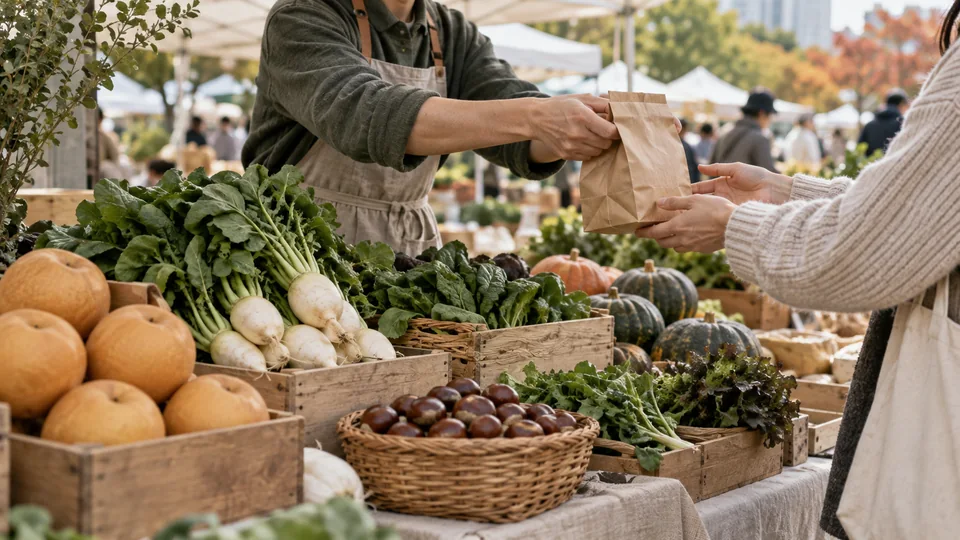
You don’t have to be shopping for groceries to enjoy a market while travelling. Look at the vegetables on the tables and the fruit coming into season, and you get a little closer to the place you’re visiting.
Korea’s farmers’ markets bring together people who grow ingredients and people who make food. You can browse fresh produce and small things to eat at your own pace.
For a market stop during a Seoul trip, start with Marche (농부시장 마르쉐@). For a wider look at ingredients, consider Gwacheon Baro Market (과천 바로마켓). If you’re visiting Daegu, there’s also the Gyeongsangbuk-do branch of Baro Market (바로마켓 경상북도점).
Why we love Marche
One of FLASH KOREA’s favourite farmers’ markets is Marche. Farmers, cooks and craftspeople create it together. Its appeal is the chance to learn who made something and how, as well as seeing what’s for sale.
Apples come in different varieties, and similar-looking greens can be used in different ways. If something catches your eye, ask how to eat it. Choosing an ingredient can become a small conversation about everyday food in Korea.
Marche runs farmers’ markets with a range of producers, as well as smaller vegetable markets. Venues and stallholders change between editions: don’t head to an old venue simply because you recognise the name.
You don’t need a kitchen to enjoy it
No kitchen at your accommodation? There can still be plenty to explore. Marche’s stall announcements include bread made with Korean-grown wheat, seasonal dishes, jams and fermented foods alongside farm produce. Menus and participating stalls vary each time.
On a short trip, start with something ready to eat or an amount you can enjoy during your stay. Staying in Korea longer? Try an unfamiliar vegetable and ask how to prepare it.
Not every product is organic, and free tastings aren’t guaranteed. Ask each stall about ingredients, growing methods and whether tasting is available.
Choose the location as well as the market
Before visiting Marche, check where that edition is taking place. A day at the National Theater of Korea (국립극장) plaza can fit a different itinerary from a day near Seoul Forest (서울숲).
One market and a nearby walk or meal is enough. Rather than crossing Seoul just to make a particular market, choose a date and venue that suit your accommodation or existing plans.
Some editions add performances, talks or workshops. These may require separate registration, so check the edition’s official programme for times and booking conditions.
For a broader ingredient shop: Gwacheon Baro Market
Gwacheon Baro Market is another regular direct-sale market to know. Produce and processed foods come from different parts of Korea, with a broad range including fruit, vegetables, fermented pastes and prepared side dishes.
It suits visitors who cook during their stay or want a closer look at the ingredients used on Korean tables. Allow time to travel to Gwacheon; this isn’t a quick stop in central Seoul.
- Venue: 경기도 과천시 경마공원대로 107, in the racecourse area of Gwacheon.
- Market days: Tuesdays and Wednesdays, according to official guidance.
- Before you go: Check that week’s notice for hours and closures. The website’s general information and its recent weekly notice give different opening times.
Already visiting Daegu? Try Baro Market’s Gyeongsangbuk-do branch
Daegu also has a substantial farm-produce market. Despite its name, Baro Market’s Gyeongsangbuk-do branch takes place in Daegu’s Buk-gu district, at 경상북도 농업자원관리원. Don’t confuse the market venue with the operator’s office address.
It’s a useful addition if you’re already travelling in Daegu or staying nearby and want to browse regional food and ingredients. We’d fit it into a Daegu trip rather than travel from Seoul solely for this market.
- Venue: 대구광역시 북구 구리로 55, 경상북도 농업자원관리원.
- 2026 operating schedule: Saturdays and Sundays between 4 April and 6 December 2026, 09:00–17:00 KST.
- Before you go: Check closures, special opening notices and registration requirements for activities.
Gyeongsangbuk-do’s 2026 opening announcement reports 210,000 visits across 74 market days in the previous year. That is an annual operating total, not attendance at a single event.
A few things to bring on your first visit
- A shopping bag and small containers: Bring reusable bags and containers suited to what you might buy. Marche encourages shopping that reduces waste.
- Buy what you can use: For chilled foods, consider the journey afterwards and the storage available at your accommodation.
- A few questions: Save “How do I eat this?”, “Is it ready to eat?” and “What ingredients does it contain?” in a translation app. The languages sellers can explain things in vary.
- Check payments and activities separately: Card and overseas-card acceptance, and activity registration, depend on the stall or programme. A Korean booking page doesn’t establish that an overseas phone number or foreign card will work.
Prices vary by product and seller. Rather than assuming a farmers’ market is always cheaper, enjoy the seasonal ingredients and the stories behind them.
The next Marche market day is on What’s On
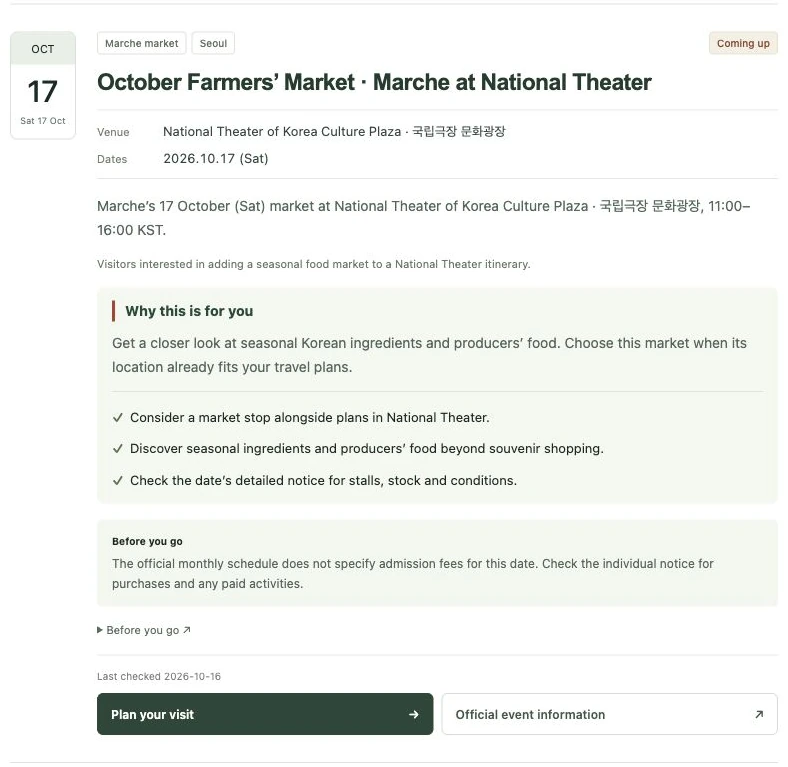
Marche isn’t a market that stays open permanently in one place. FLASH KOREA therefore lists officially checked Marche dates by venue and edition on What’s On.
Use This month and Next month to find a market day that fits your trip. Each event page includes the venue, hours and verified programme or booking information. Schedules can change, so check the linked organiser’s notice again before setting out.
How is it different from a traditional market?
Traditional markets and farmers’ markets both connect you with local food and people. What you hope to find shapes the way you enjoy them.
- What you browse: Traditional and permanent markets can cover everyday needs from ingredients and side dishes to household goods and places to eat. The farmers’ and direct-sale markets in this guide put more emphasis on seasonal produce and food from its makers.
- The conversations: Traditional-market sellers can share preparation and cooking know-how. At a farmers’ market, you may be able to ask the grower or maker about production and ingredients. Traditional markets also have producers selling directly, while Marche includes cooks and craftspeople as well as farmers.
- Planning a visit: At a permanent market, check individual shops’ opening days and holidays. For a market held on selected dates, start with the date, venue and stall list. Even the same market name can mean a different atmosphere and selection at each edition.
Neither is inherently better. For a broad look at everyday shopping and market food, try a traditional market. For time with seasonal ingredients and the people who make them, choose a farmers’ market.
You don’t need to leave with a full shopping bag. Being curious about Korea’s seasons is reason enough to stop by.
Official sources checked
- Marche · about the market
- Marche · official calendar
- Marche · example stall list and shopping guidance
- aT Baroinfo · Gwacheon Baro Market
- Gwacheon Baro Market · venue
- Gwacheon Baro Market · weekly notice, 13–14 October 2026
- Baro Market Gyeongsangbuk-do branch · operating notices
- Baro Market Gyeongsangbuk-do branch · venue
- Gyeongsangbuk-do · 2026 opening announcement and previous-year results
Last checked: 2026-10-16
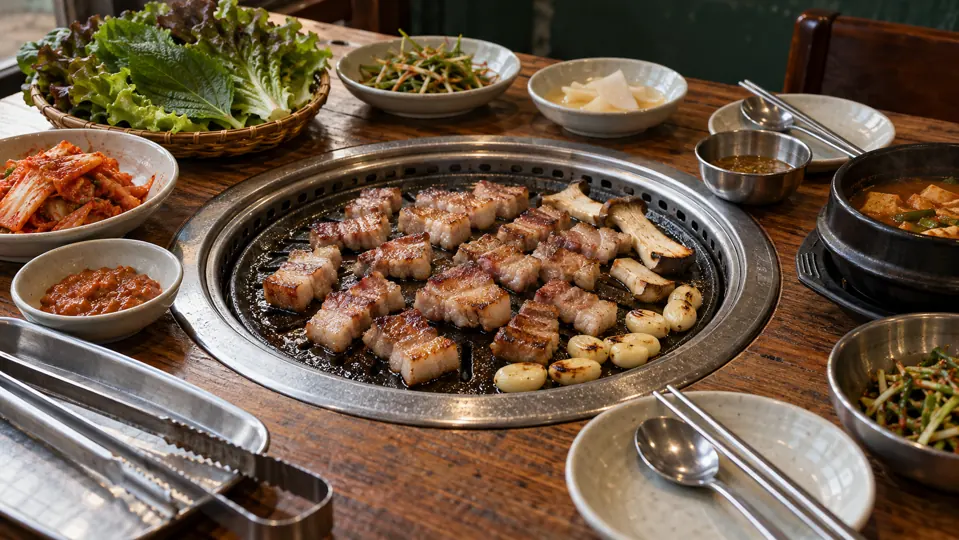
Eating Alone in Korea: Menus, Barbecue and Minimum Orders
From a roll of gimbap or a bowl of sundaeguk to barbecue and shared stews, here is how to understand portions and minimum orders when dining alone in Korea.
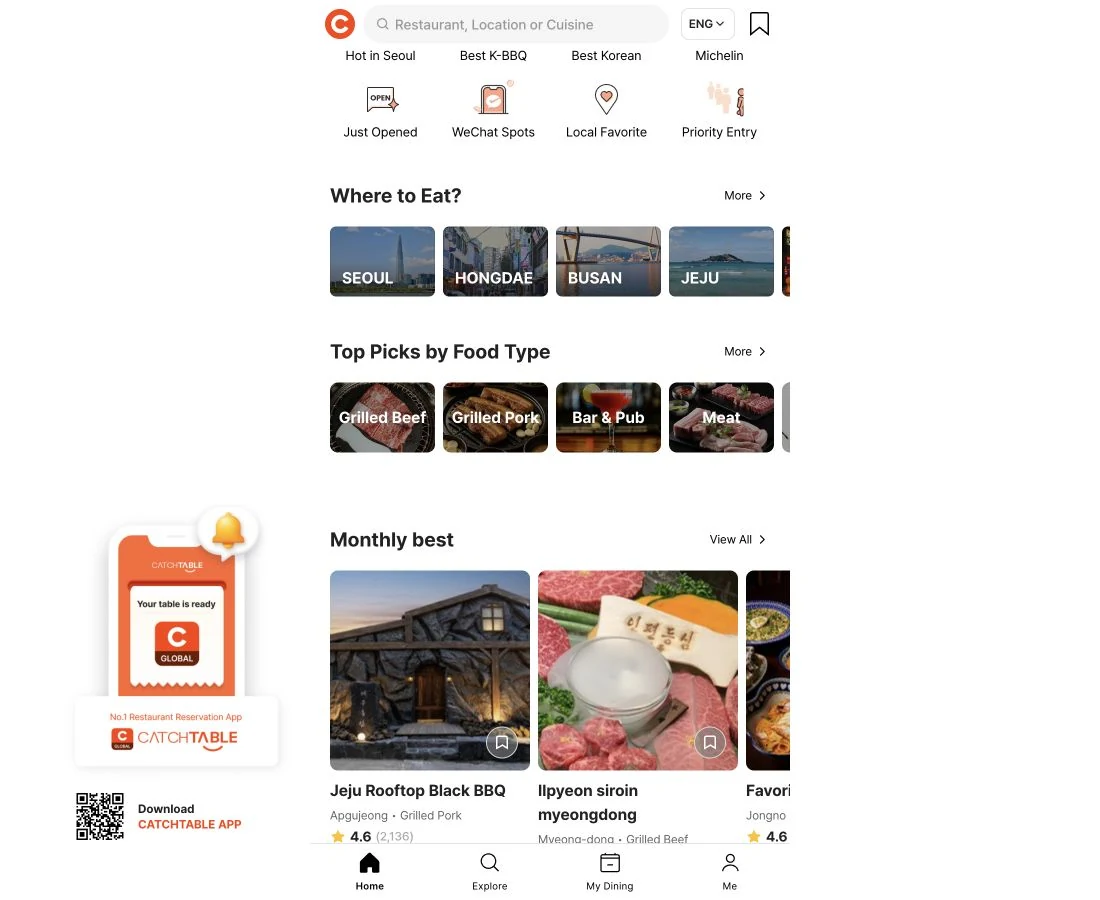
Booking Restaurants in Korea: CATCHTABLE and NAVER
“I really want to eat here—but how do I book?” You have options without a Korean phone number. From planning a special meal on CATCHTABLE to finding neighbourhood restaurants on NAVER, let’s walk through the English booking screens.
Seoul on a Rainy Day: 6 Indoor Activities & Cafés
Explore six rainy-day ideas in Seoul: museums, The Hyundai Seoul, Hongdae anime shops and Han River cafés, with opening hours, costs and transport tips.

Where to Buy 탱글 (Tangle) in Korea: A Small Souvenir to Take Home
Meet 탱글 (Tangle), the twistable fidget toy catching attention in Korea. Discover how it differs from 말랑이, where to look in Seoul and how to choose one as a travel souvenir.

Korean Profile Photos: Booking a Portrait Session in Seoul
Plan a Korean studio portrait, from choosing a style and booking to outfits, retouching, original files and receiving your photographs.

Photo Booths or Self-photo Studios in Korea? How to Choose
Compare Korean four-cut photo booths, self-service studios and photographer-led sessions, including bookings, digital files and prints.
Seoul with Kids: 4 Family Experiences to Plan Around
Choose from three children’s museums and a family photo session, with ages, locations, hours and booking details to help plan a day in Seoul.
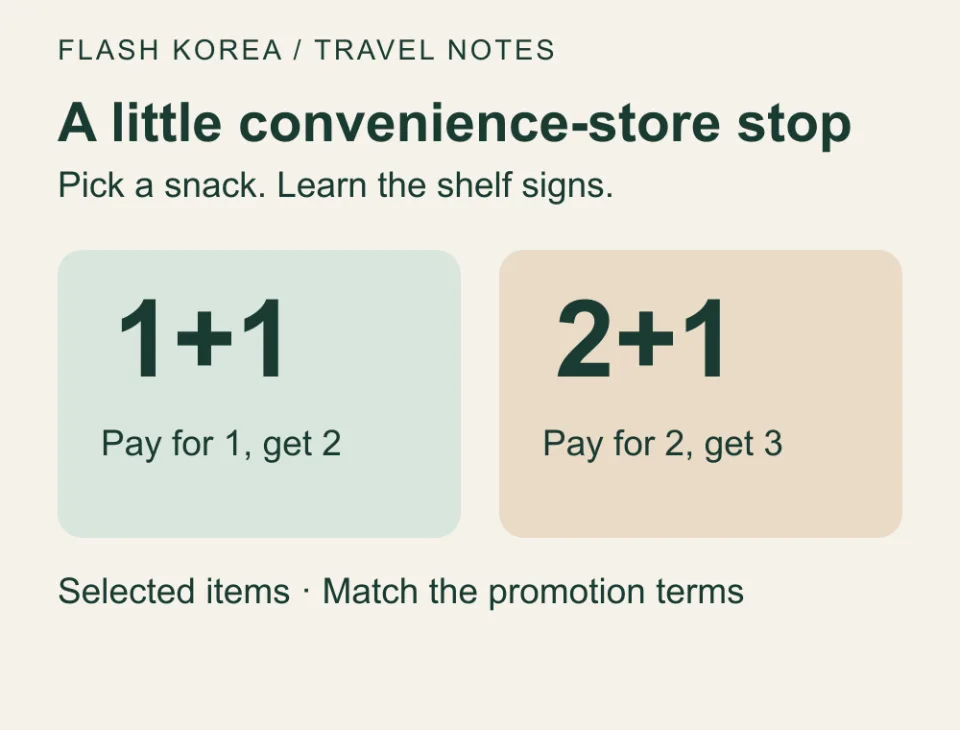
Korean Convenience Stores: Ramyeon, Snacks and 1+1 Deals
Learn how to prepare convenience-store ramyeon, choose snacks and triangle gimbap, and understand 1+1 offers, seating and cooking facilities.
How to Find and Book a Photographer in Seoul
Plan a Seoul photo session: compare portfolios and quotes, agree locations, editing and file delivery, and clarify booking and image-use terms.
Seoul Palace Photos: Gyeongbokgung and Changdeokgung
Try portrait compositions at Geunjeongjeon, Gyeonghoeru, Injeongjeon and Nakseonjae, with practical guidance on light, clothing and visiting restrictions.
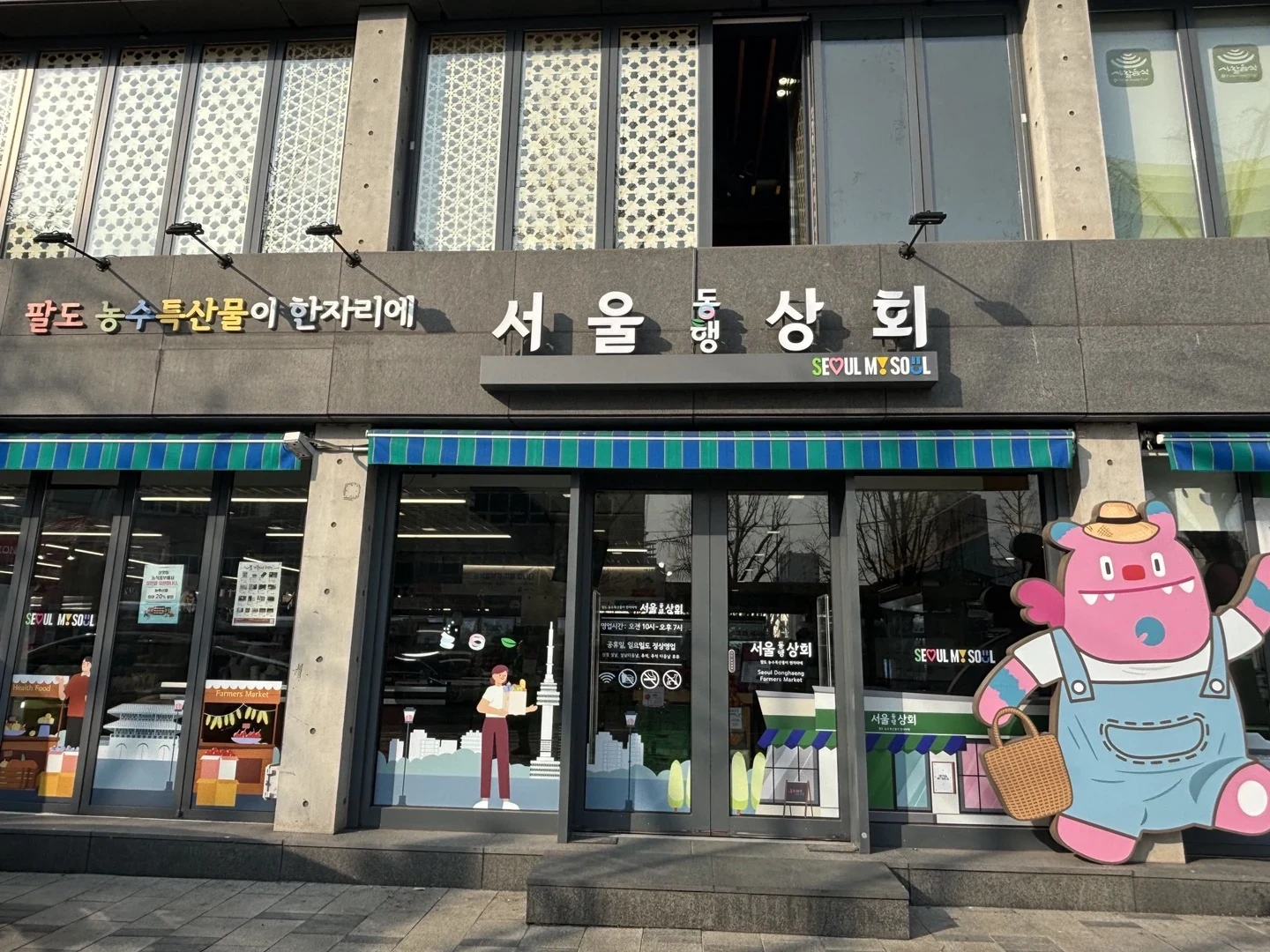
Food Souvenirs near Anguk: Seoul Donghaeng Sanghoe
Browse Korean regional foods and small gifts near Anguk Station. Add Seoul Donghaeng Sanghoe to a palace or Bukchon walk, with opening hours and market tips.
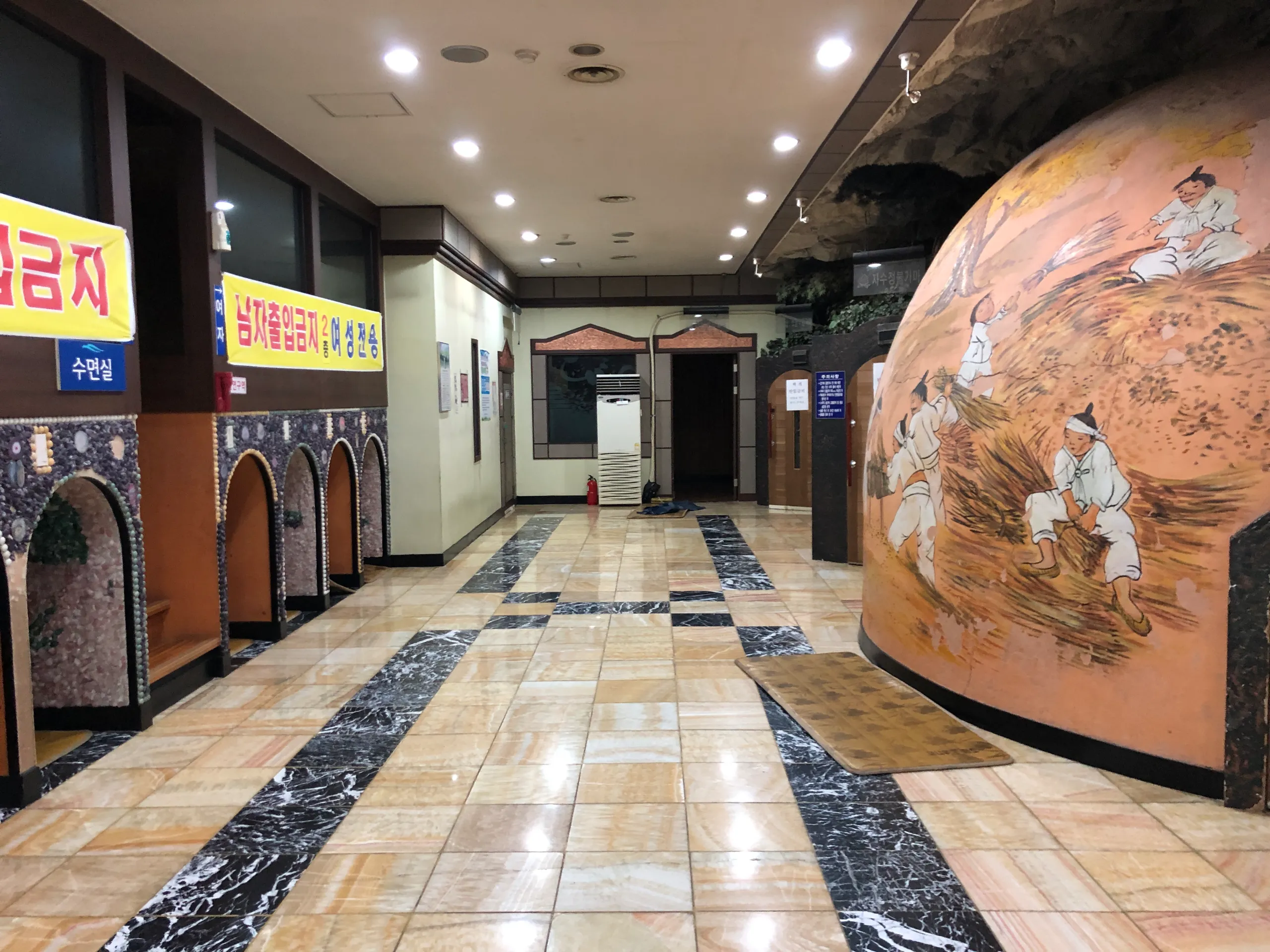
Your First Korean Jjimjilbang: Baths, Rest Areas and Payment
How to use a Korean jjimjilbang, from changing rooms and shared rest areas to extra charges, photography rules and visiting Aquafield Goyang.
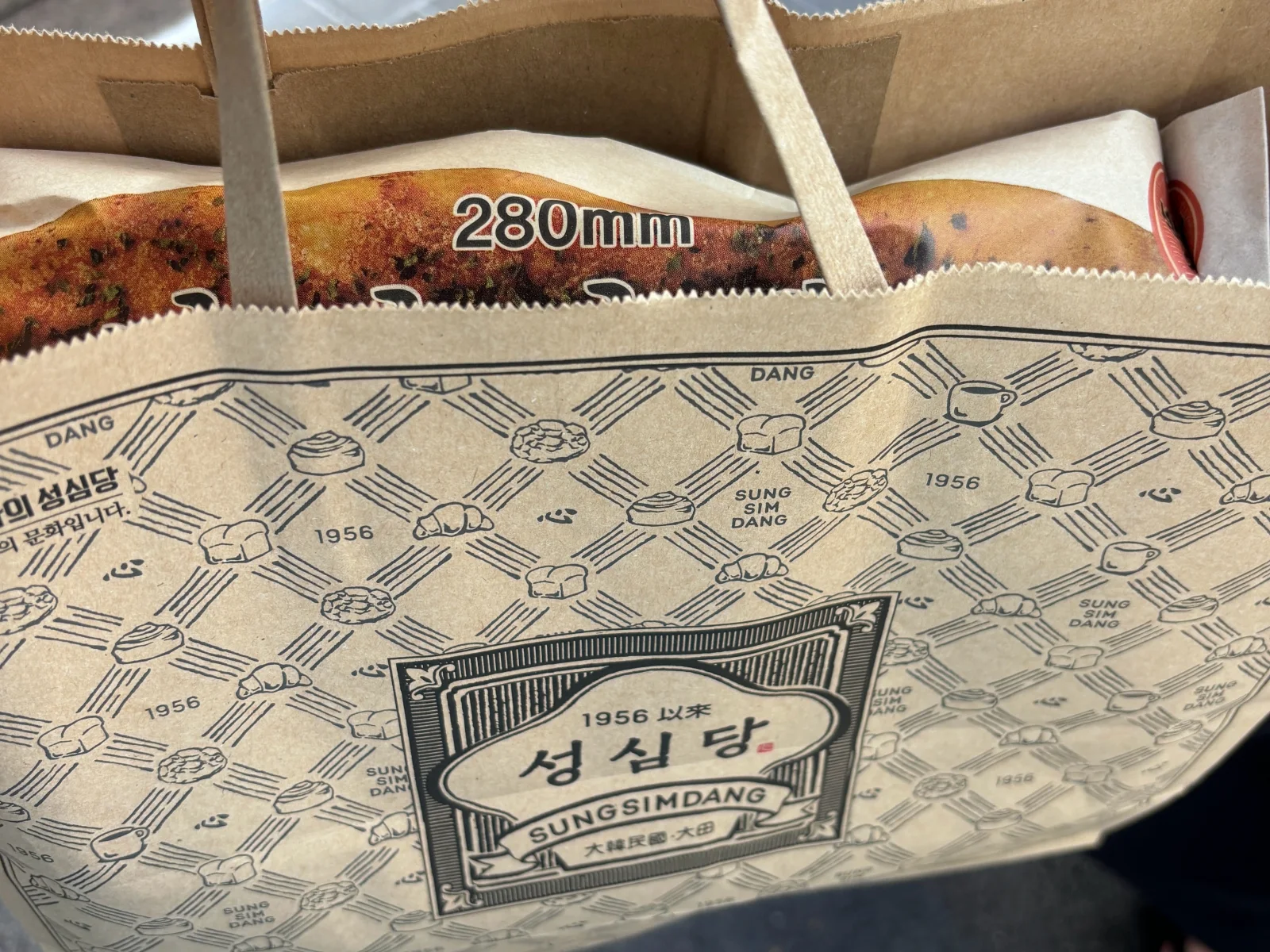
Sungsimdang in Daejeon: Bread to Try, Branches and Queue Tips
Plan a first visit to Sungsimdang with bread suggestions, main-store and Cake Boutique hours, DCC location, queue advice and refrigerated-food tips.
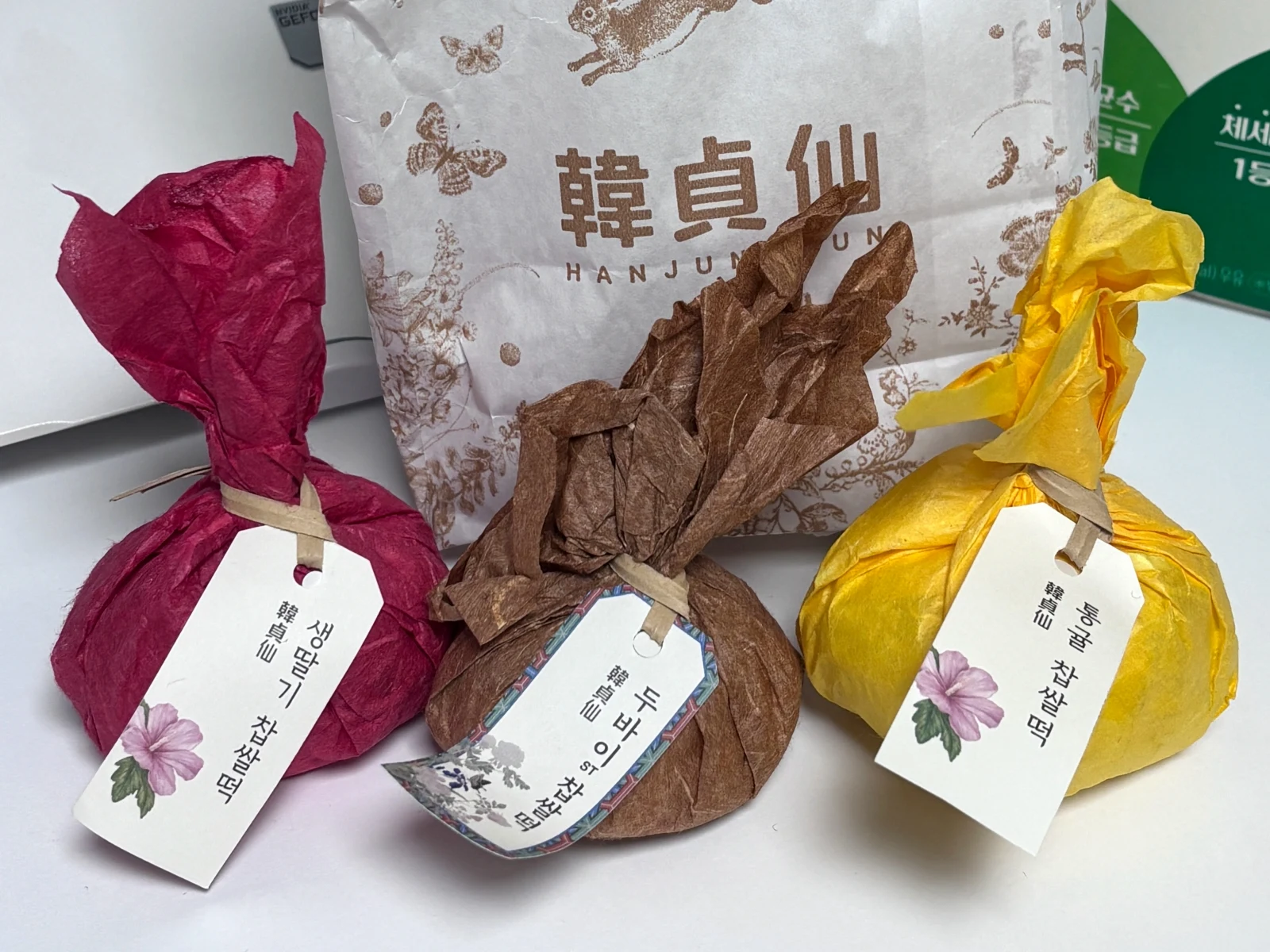
5 Snacks to Try in Korea: Fruit Rice Cakes, Dubai Chewy Cookies and More
Discover Hanjungsun fruit rice cakes, pizza seolgi, butter tteok, Dubai chewy cookies and salt bread, with ways to find shops and practical storage tips.