
Business Etiquette in Korea: A Guide to Visiting Korean Companies
From introductions and business cards to meetings, business meals and follow-up: a practical guide for international visitors meeting Korean companies for the first time.
FLASH KOREA · 2026-10-14
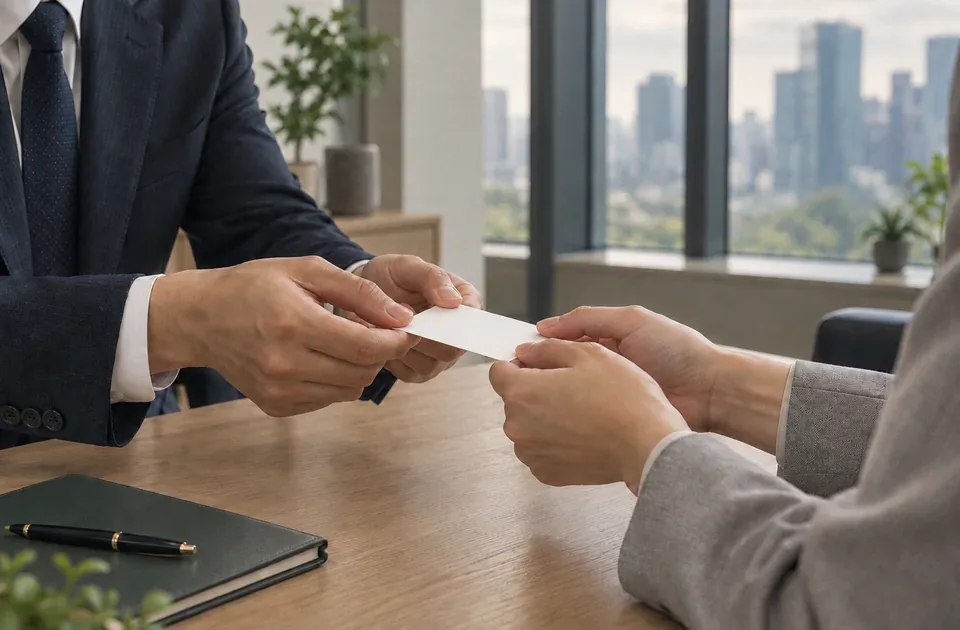
Before your first visit to a business partner, meeting materials may not be your only concern. How early should you arrive? When should you exchange business cards? How should you address the person you are meeting? Small gestures can feel uncertain in an unfamiliar setting.
Business etiquette may seem to come with fixed answers, but workplaces vary. Some organizations place particular emphasis on hierarchy and formality; others address colleagues by name and encourage open discussion. Even within one company, a formal meeting may feel different from a working session.
Rather than memorizing every convention, it helps to know the essentials for a first encounter. This guide covers visiting a company, introductions, business cards, meetings, meals and follow-up.
A useful starting point: Respect the other person's time, check their preferred form of address and working style, and record the next steps you agree on.
Before your visit: confirm the actual meeting location
Punctuality matters. When visiting a company for the first time, however, distinguish between arriving at the building and entering the meeting room.
Large office buildings and corporate premises may require visitor registration and a pass. Research institutes and production facilities with stricter security may have a designated visitor entrance.
Check how long registration takes. Allow enough travel time to complete registration and be waiting 10–15 minutes before the meeting starts, with more time for complex security procedures. If you arrive very early, follow the agreed arrangements rather than asking the contact to receive you immediately.
Check before you go
Company name · Actual meeting address · Building and floor · Entry procedures · Contact details
Check whether the headquarters address on the company website matches the venue in your invitation. The meeting may be in an external meeting room or at another site.
Confirm the meeting language, whether interpretation is needed, the dress code and any identification to bring. Ask permission before photographing company interiors or recording the meeting.
Introductions: a handshake or a small bow?
A greeting with a slight bow is a reasonable starting point. Handshakes depend on the situation and the person. If they offer their hand, respond naturally; greeting each other without a handshake is also fine.
Make brief eye contact, introduce yourself, and clearly state your organization and name.
With several attendees, follow the person making introductions rather than automatically offering everyone a handshake. Some organizations still greet senior figures first, but the order depends on participants' roles and the atmosphere.
Business cards: use both hands and take a moment to read
Exchanging business cards is common in Korean business meetings. It is also an initial opportunity to check a person's organization, name and position.
Offer your card with both hands, facing the recipient so they can read it. Receive theirs with both hands and check their name and title.
Some meetings use digital cards or exchange contact details by email. Bring printed cards, but follow the method your counterpart suggests.
Look briefly at the name and organization rather than putting the card away unread.
During the meeting, keep it somewhere convenient for checking the person's name. Put it away respectfully when the meeting ends.
Forms of address: check the person's title first
In Korean companies, people are often addressed by a name followed by a position.
For example, a name may be followed by a title: “김민수 팀장” (Kim Min-su, team leader) or “이지은 과장” (Lee Ji-eun, gwajang, a Korean job title). When addressing someone directly, the respectful suffix nim (님) is often added: “김민수 팀장님” or “이지은 과장님.”
Companies do not all use the same system. Some adopt common forms such as “manager,” “leader” or “nim” instead of ranks to encourage a flatter culture.
For a first meeting, refer to the position in the email signature or on the business card. Follow a different form of address if the person requests one.
Avoid guessing their rank when you do not know it. Confirm their name and address them politely, or ask what they prefer.
If you are unsure what to call someone
Simply ask, “How would you like me to address you?” In Korean, you can say “어떻게 불러드리면 될까요?” An English translation of a Korean title alone does not establish someone's seniority or decision-making authority.

During the meeting: distinguish a response from a decision
Alongside the presentation, pay attention to who is responsible for what.
Even if an operational contact explains the proposal, a final decision may require approval from another department or the person responsible. In projects involving several departments, do not assume that every attendee can give final approval.
Also distinguish a positive response from an actual agreement.
“We will review it” or “We will discuss it internally” does not mean a proposal has been confirmed. Some companies respond after further consideration rather than rejecting an idea immediately, but these expressions should not be interpreted uniformly.
Reconfirm important points at the end of the meeting.
Record confirmed decisions, points requiring further review, the person responsible and the expected reply date separately.
Summarizing a verbal discussion by email afterward can reduce misunderstandings.
One more check before the meeting ends
Ask, “Could we separate what we confirmed today from what still needs internal review?” This helps clarify the next steps. Use a specific date and time zone rather than “next week” for a reply. When sharing schedules with an overseas team, indicate whether the time is Korea Standard Time (KST).
Business meals: seating, payment and alcohol
Lunch or dinner may take place before or after a meeting. Conversation can be more relaxed than in a meeting room, but a first encounter still calls for some preparation.
At formal meals, the host may indicate seating. Follow assigned places; if there are no instructions, taking a seat naturally is fine.
The inviting party sometimes pays, but this is not a universal rule. If external clients or public-sector officials attend, consider company policies and applicable rules on hospitality, gifts and meal expenses.
Attitudes to offering and drinking alcohol are changing. You may decline politely: “Thank you, but I don't drink alcohol.” In Korean: “감사하지만 저는 술을 마시지 않습니다.” Ask for another drink, and do not pressure others to drink.
Tell the host about dietary restrictions, allergies or vegetarian requirements before the menu is decided. A gift is not essential for a first visit. If you want to bring one, first check whether the recipient's company permits it. Meals and gifts involving public-sector officials and others may be restricted by rules such as Korea's Improper Solicitation and Graft Act (청탁금지법). Do not offer them without checking with your contact.
After the meeting: focus on the next steps
Send a brief thank-you email with a summary of the discussion.
People may understand the same conversation differently, particularly at a first meeting. Important points such as quotations, contract terms and schedules are best recorded by email.
If someone says, “I will send the materials by next week,” confirm a specific date and delivery method. If your counterpart will conduct an internal review, record who is responsible and when they expect to reply.
A long thank-you message is unnecessary. Clarity about what was discussed and what happens next is more important.
Three things to include in your follow-up
- Agreement: What was confirmed today and what remains under review
- Responsibility: Who will send materials or reply
- Next steps: Specific dates and delivery methods
Focus on ensuring everyone understands the same next steps, rather than extending the thank-you message.
Adapt etiquette to the situation
No single approach is right for every company visit. Consider the meeting's purpose and the organization's culture together.
First meeting with a business partner
- Confirm names and positions; prepare business cards and company materials; outline the purpose and key agenda.
Large company or public institution
- Check advance registration and entry procedures; prepare identification and passes; review building security rules.
Startup or working collaboration
- Check preferred forms of address and communication channels such as email or messaging; understand the workflow and decision process.
Meeting with overseas partners
- Confirm the working language and interpretation needs, participants' roles and decision-makers; prepare meeting materials and follow-up schedules.
Corporate event or conference
- Check advance registration, admission procedures, networking activities and schedules, venue location and the on-site contact.
Factory or research institute
- Check the visitor entrance, entry procedures, photography and security restrictions, and requirements for safety training and protective equipment.
Dress and the order of introductions may matter at formal events; precise scheduling and prompt sharing of materials may matter more in working meetings.
Decide what to check based on the visit's purpose, rather than assuming how the other organization operates.
Good business etiquette starts with the essentials, not memorizing complex rules: confirm the place and participants, respect their time, and follow through accurately on the next steps you agreed on.
- U.S. International Trade Administration · Business customs in Korea
- Anti-Corruption and Civil Rights Commission · Official legal reference (English)
Last checked: 2026-10-14

Business Trip to Korea: Where to Stay in Seoul and Gyeonggi
Planning a business trip to Korea? Choose where to stay in Seoul and Gyeonggi around your meetings in Central Seoul, Yeouido, Gangnam, Pangyo, Suwon and KINTEX.