
Business Trip to Korea: Where to Stay in Seoul and Gyeonggi
Planning a business trip to Korea? Choose where to stay in Seoul and Gyeonggi around your meetings in Central Seoul, Yeouido, Gangnam, Pangyo, Suwon and KINTEX.
FLASH KOREA · 2026-10-28
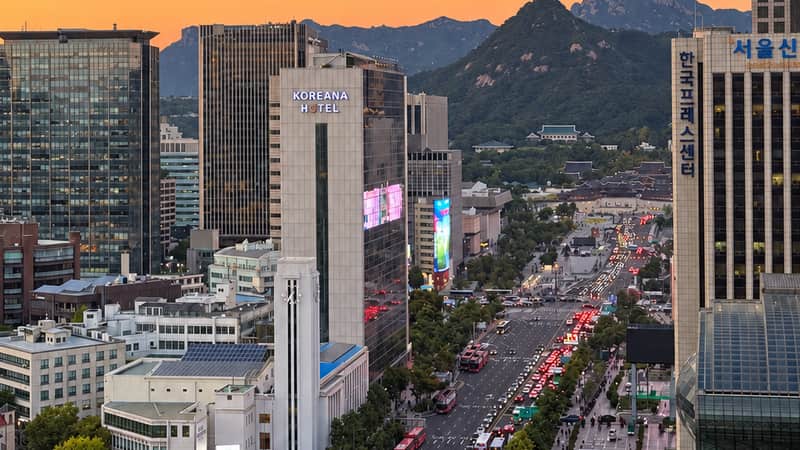
Start with your meeting addresses
Choosing a hotel for a Seoul business trip can be confusing when the district names are unfamiliar. Should you stay near the airport, in a sightseeing area, or close to your meetings?
Before searching for hotels, collect the actual addresses in itinerary order. A trip described as a Seoul visit may include meetings in Pangyo, outside Seoul. A company's headquarters, research campus and production site may also be in different places.
Request the Korean address, building name, visitor entrance or gate, required arrival time and on-site contact. A map pin may identify the property rather than the entrance you need. This guide focuses on choosing a practical base, rather than ranking hotels.
Seoul: choose around your repeated appointments
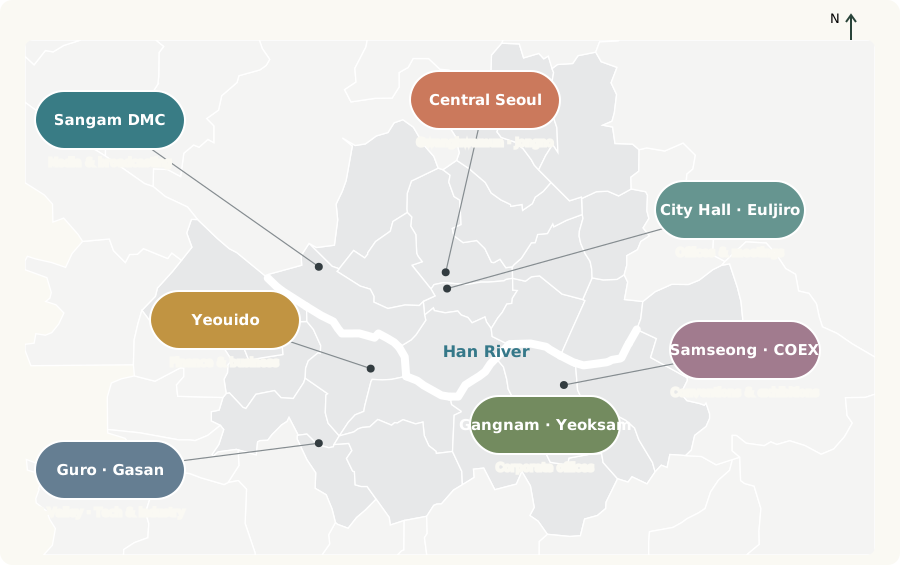
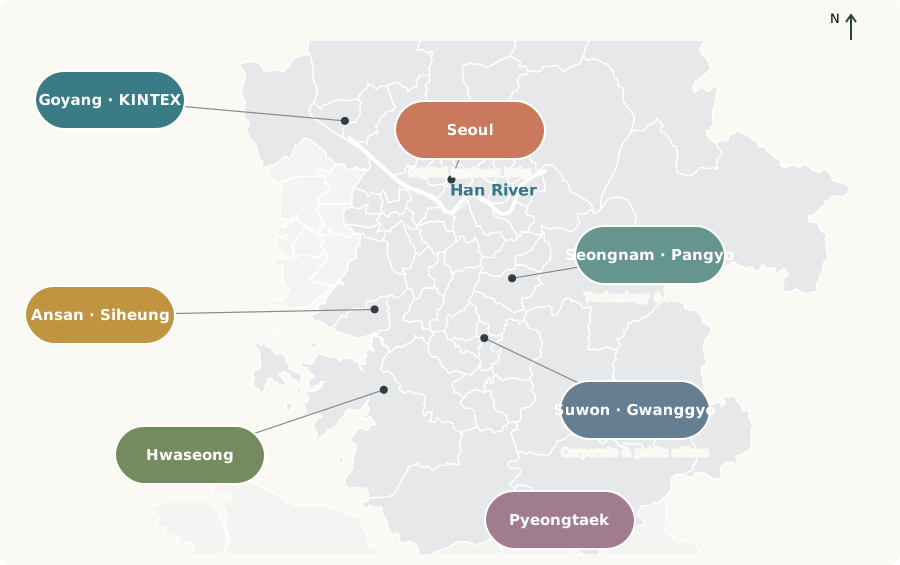
Start by distinguishing Central Seoul, Yeouido and Gangnam. Then check whether your itinerary includes other areas such as Guro, Gasan or Sangam. The infographic shows representative locations and simplified administrative boundaries; use the actual address for route planning.
Gwanghwamun, City Hall, Jongno and Euljiro
If your meetings cluster around these central districts, compare hotels in Central Seoul first. A nearby base can be useful when you need to return between appointments to prepare documents or leave luggage.
Before booking: check the route to each building and its actual entrance. Being in the city centre does not mean every appointment is within walking distance. Allow separately for visitor registration, and check where you will get dinner and breakfast.
Yeouido: finance and consecutive meetings
Yeouido is a major financial business area, as described by the Seoul Metropolitan Government. If you have meetings here over several days, hotels serving your specific destinations are a useful starting point.
Before booking: compare the actual routes from Yeouido Station and other nearby stations. Consider how you will move if a meeting venue changes. Do not treat the entire district as one station catchment area.
Gangnam, Yeoksam, Seolleung and Samseong
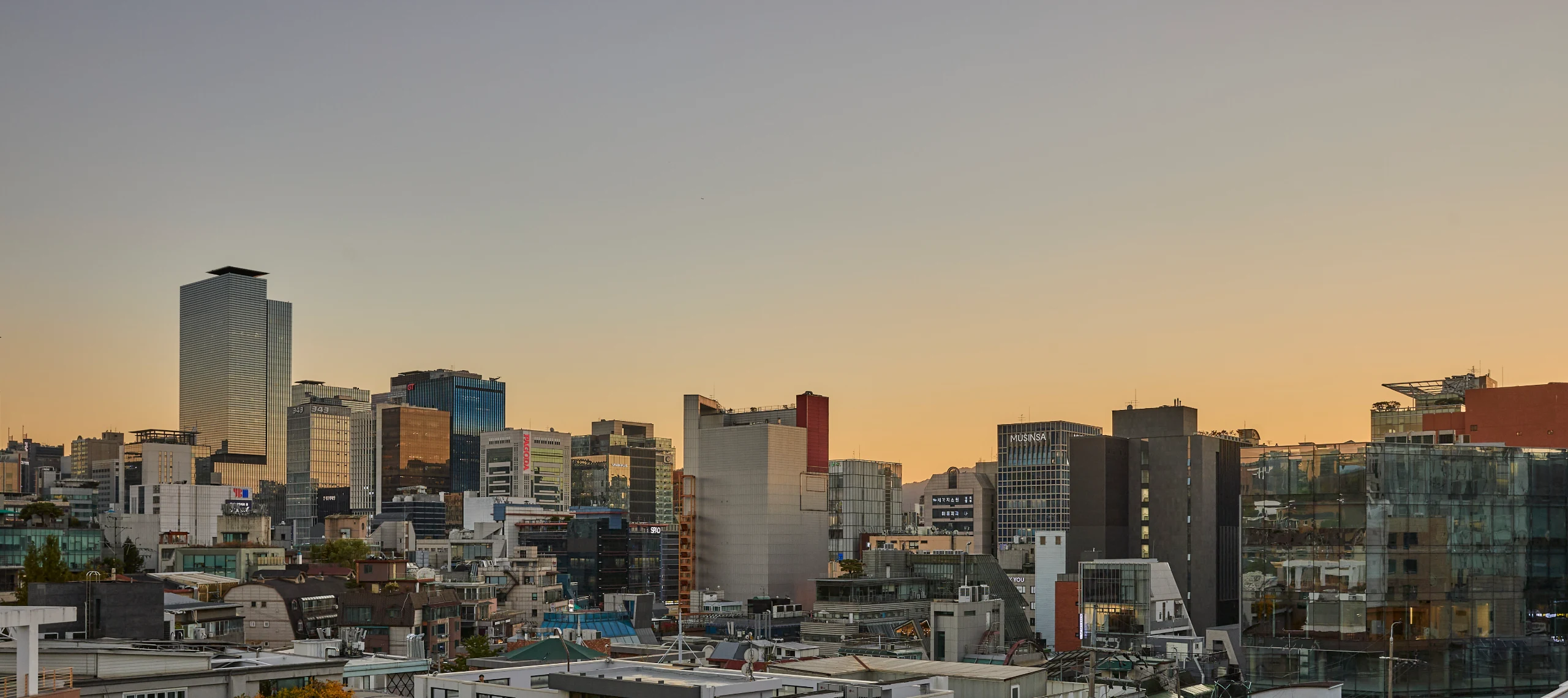
Ask for the nearest station and building name rather than relying on 'near Gangnam'. An office appointment near Gangnam Station and an exhibition at COEX in Samseong are different destinations. Check the COEX venue information alongside the organizer's current instructions.
Before booking: obtain the hall, meeting room and registration location for an event. For office visits, prioritize the route you will use each day over the hotel's name or reputation.
Guro and Gasan: company visits in G-Valley
G-Valley, the Seoul Digital Industrial Complex, is associated with manufacturing and technology businesses. Seoul's official introduction explains this background. Guro Digital Complex Station and Gasan Digital Complex Station are separate destinations.
Before booking: search the company's exact address before choosing a station or hotel. For large office complexes, request the building, floor and visitor entrance. The final walk matters if you are carrying luggage or equipment.
Sangam DMC: confirm the actual work location
Media-related visits may take you to Sangam Digital Media City. Seoul's DMC information describes the area's industry background. An office, filming location and meeting point may not be the same place.
Before booking: obtain each location separately. For early calls or late finishes, check the final journey back to the hotel and its check-in conditions.
Pangyo and Bundang: the building matters
When combining Seoul and Gyeonggi appointments, evaluate each address separately. A regional name alone is not enough to choose a hotel.
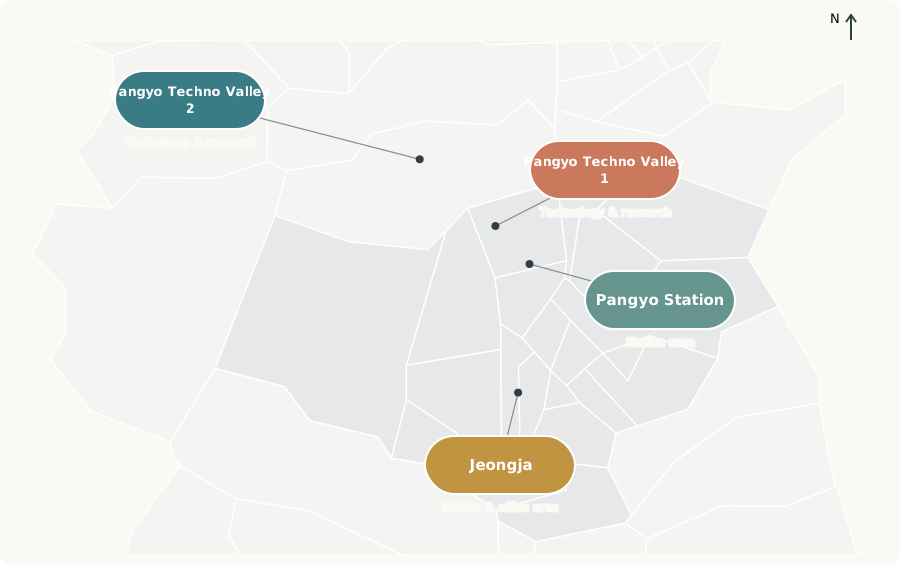
Pangyo: distinguish the station and technology valleys
Pangyo Techno Valley is a research and business hub for technology, biotechnology and content industries. Consult the official introduction and Pangyo Techno Valley 2 information.
Do not assume a company described as being near Pangyo Station is an easy walk from it. The specific valley and building determine the final part of the journey.
Choose your base: if early meetings in Pangyo repeat over several days, compare local accommodation with a Seoul base. Include repeated transport costs and preparation time in that comparison. Access to the actual office matters more than access to a station alone.
Bundang and Jeongja: check separately from Pangyo
If an invitation says only Bundang, request the neighbourhood and address. When meetings are divided between Pangyo and Jeongja, compare the routes between the actual buildings.
Choose your base: prioritize your first and last appointments and the number of repeat visits, rather than simply choosing the geographical midpoint. If you consider changing hotels, include luggage storage and check-in times.
Southern Gyeonggi and Goyang are separate trips
Suwon, Hwaseong, Pyeongtaek and Goyang are all in Gyeonggi, but they do not form one compact business district. Whether a single Seoul hotel works for daily return journeys depends on your actual addresses and start times.
Suwon, Yeongtong and Gwanggyo
Suwon includes business campuses such as Samsung Digital City. Do not choose around Suwon Station simply because an appointment is in Suwon. Check the specific site and visitor gate. Treat a Gwanggyo appointment as its own destination.
Choose your base: prioritize site access when you will return to the same campus or institution. If your host offers a pickup or shuttle, confirm the departure point and availability before including it in your hotel decision.
Goyang KINTEX: ask for the building and hall
KINTEX has Exhibition Centers 1 and 2. Check the official organizer information and the current event instructions for your building and hall.
Choose your base: for a multi-day exhibition, compare access to registration and the journey back after the event. Attendee entrances and equipment delivery points can differ; confirm the appropriate route for your role.
Industrial visits: the visitor gate is the destination
For visits in Seongnam's Sangdaewon, Ansan, Siheung, Hwaseong or Pyeongtaek, the host's visitor entrance matters more than the city name. Avoid navigating to a headquarters address or the centre of a large industrial property by mistake.
Choose your base: compare hotels near the site, a convenient transport hub or an agreed pickup point. For late finishes, confirm dinner options and the return journey. Use an address and a transport plan rather than a vague promise that the hotel is nearby.
Which base should you compare first?
- Three days of meetings in Yeouido: start with hotels serving the buildings you will visit, and check each meeting time.
- Daily morning appointments in Pangyo: compare local options and a Seoul base, including the final journey to the office.
- Several days at COEX: prioritize access to your hall and registration point, and the event finish time.
- Two days in Seoul followed by two in Suwon: compare staying put with changing hotels, including luggage and check-in.
- Visits to Hwaseong or Pyeongtaek sites: compare accommodation near the visitor gate or your agreed pickup point.
These are planning examples, not tested rankings of hotels or transport services.
Compare the whole trip cost, not just the room rate
A cheaper room may change the total trip cost if you need taxis every day or cannot return between meetings. Moving hotels for one short appointment can also cost time through luggage transfers and check-in.
For each candidate, list the room price, expected transport cost, transfers and walking, luggage arrangements, and cancellation terms. Compare journey estimates for the same weekday and time of day; allow separately for registration and movement inside the building.
Dinner options or a short after-work walk can be useful secondary criteria. First choose a base that fits the following morning's work commitments.
Your final booking checklist
- Have you received the Korean address and building name for every meeting?
- Have you checked the final route from the station or hotel to the visitor entrance?
- Can you arrive in time for the first appointment?
- Have you checked airport transport alternatives for a late arrival or early departure?
- Have you confirmed luggage storage, internet access, a desk and the receipt you need?
- Have you checked cancellation and change conditions?
A useful business-trip hotel is one that fits the places you repeatedly need to visit and the times you need to arrive. Collect the work addresses first, then compare hotels.
Map data and credits
Administrative boundaries originate from Statistics Korea SGIS under KOGL Type 1, modified by vuski/admdongkor under CC BY 4.0 and simplified by mapcn-kr. FLASH KOREA adapted the projection, styling and annotations. The Seoul river line follows shared administrative boundaries; the regional river line uses simplified Natural Earth public-domain data. Dots identify representative locations, not the full extent of business areas. Confirm your actual destination and route separately.
Business Etiquette in Korea: A Guide to Visiting Korean Companies
From introductions and business cards to meetings, business meals and follow-up: a practical guide for international visitors meeting Korean companies for the first time.