
Tmoney or Climate Card? Choosing a Transit Card for Korea
Compare Tmoney and Seoul’s Climate Card by itinerary, including short-term pass prices, airport rail coverage, top-ups and transfers.
FLASH KOREA · 2026-10-26
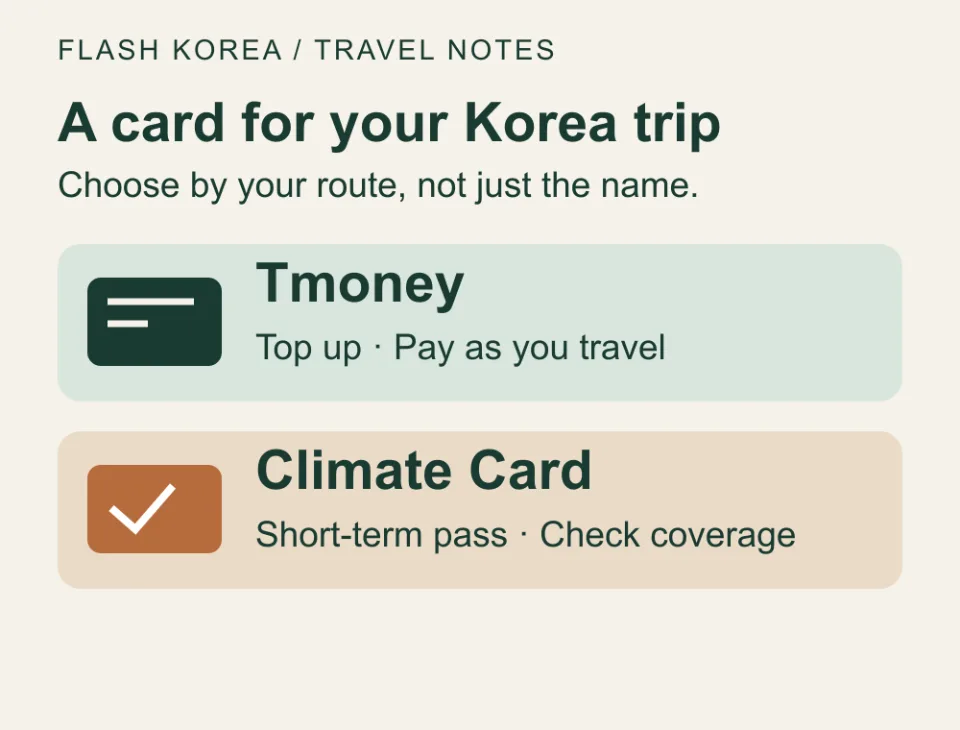
Trying to get from the airport to your accommodation and wondering which card to buy? Start with where you will travel. A busy week on Seoul’s buses and subways calls for a different comparison from a trip across several cities.
1. For travel across several cities, start with Tmoney
Tmoney is a prepaid transit card: add credit, then pay as you travel. The Korea Tourism Organization lists convenience stores and subway locations where you can buy and top up cards. The card purchase price and your travel balance are separate, so buying the card does not mean it comes loaded with enough credit.
Add enough for your first journey to your accommodation, then top up as needed over the following days. Reserved trains such as KTX require separate tickets; a transit card does not cover every form of long-distance transport.
2. For a Seoul-focused trip, compare the short-term Climate Card
The Climate Card is a pass for a set period within a defined network. Seoul’s official short-term prices are KRW 5,000 for 1 day, KRW 8,000 for 2 days, KRW 10,000 for 3 days, KRW 15,000 for 5 days and KRW 20,000 for 7 days. The physical card costs a further KRW 3,000. The pass starts on the day you load it, so load it on the day you plan to travel. Check that both your accommodation’s nearest station and your destinations fall within its coverage.
Excluded services include the Shinbundang Line, GTX and airport buses. On the Airport Railroad, you may travel from a covered station and alight at Incheon Airport Terminal 1 or 2; you cannot use the pass to board at the Incheon Airport stations. Gimpo Airport Station is covered. Compare the current short-term pass information rather than relying on an older guide to the 30-day pass.
3. Plan how you will buy and top up your card
Physical Climate Cards are sold at the new transit card machines in Seoul Metro stations on Lines 1–8 and at designated convenience stores. Seoul’s Korean-language FAQ says that, from March 17, 2026, foreign-issued credit and debit cards can be used to buy and load short-term Climate Card passes at those new machines. This does not apply to every convenience store or older top-up machine.
Physical Tmoney, mobile transit cards and other travel payment cards may have different loading methods. Check the card and accepted payment methods at the counter or machine. Having some Korean won cash on arrival gives you another option.
Do not assume that foreign-card support for a short-term Climate Card also applies to other cards or mobile apps. If you plan to use only your phone, check your device, wallet app and foreign-issued card before departure, and prepare a fallback.
4. Use the same card when boarding and leaving
Tap in and out on the subway, and tap when boarding and leaving buses. Remembering to tap off the bus is particularly useful. Transfer discounts depend on conditions such as the route and time; they do not make every transfer free.
If you carry several transit cards, take out the one you intend to use and hold it to the reader. If an error appears, check the message and balance or ask a member of staff rather than repeatedly trying the gate.
5. Check refund arrangements before your final journey
Refund limits, counters and fees vary by card and outlet. Check the rules for unused credit separately from the purchase price of the card; do not assume both will be refunded. Loading smaller amounts also makes your remaining balance easier to manage.
On your last day, leave enough for the airport journey before deciding whether to request a refund or keep a small balance. Climate Card and Tmoney refund procedures may differ.
Before you set off
Check your cities and stations, excluded routes, the separate card and travel costs, accepted top-up methods and what to do with unused credit. The best card is the one that fits your route.
This guide is based on published information rather than a hands-on test. Check current fares, hours, supported functions and booking conditions on the official service pages for your travel dates.
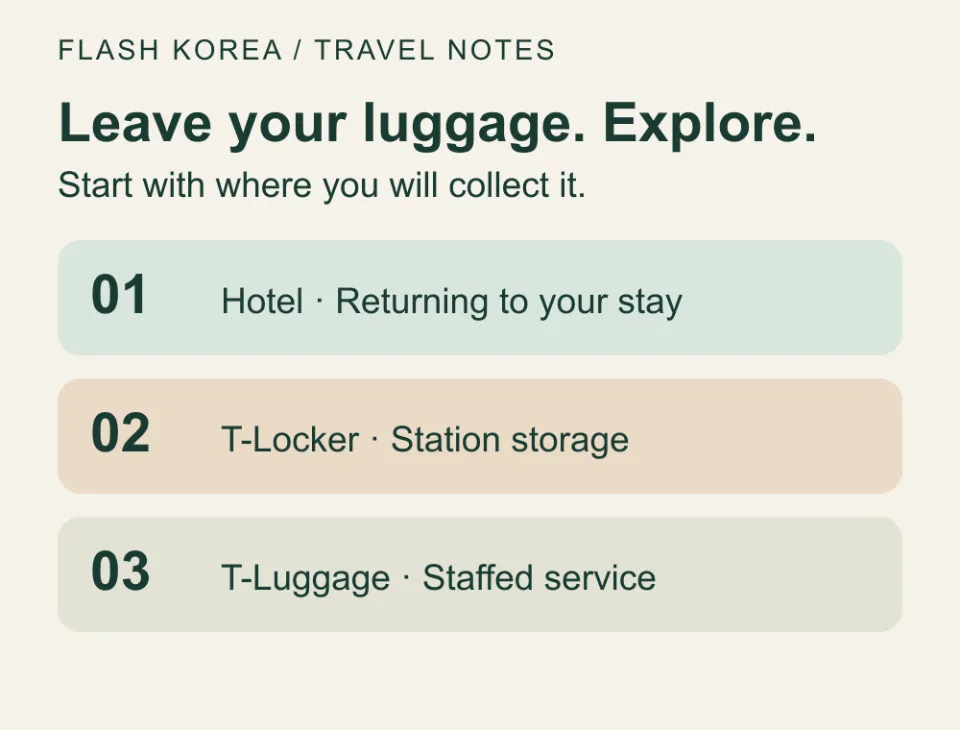
Luggage Storage in Seoul: Before Check-in and After Check-out
Compare hotel storage, T-Locker, T-Luggage and Hongdae’s KPLANZ, with practical locations, collection times and airport connections.
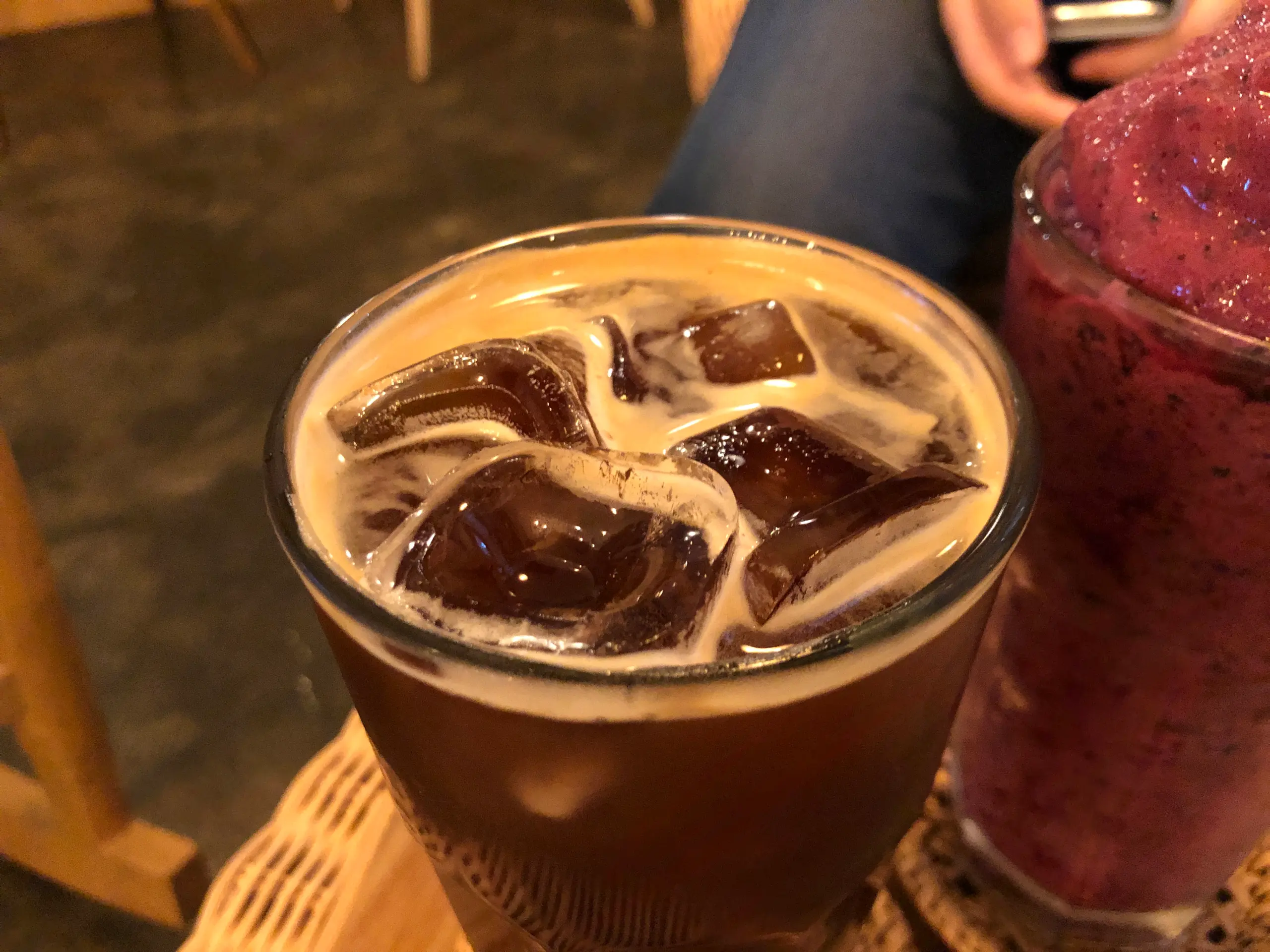
How to Order at Cafes in Korea: Decaf, Milk Options and Takeaway
A practical guide to ordering coffee in Korea, changing milk or sweetness, paying at kiosks and collecting your drink—with Korean phrases to show staff.