
Seoul Autumn Walks: 4 Relaxed Half-Day Routes
Explore four autumn walks in Seoul: Seoul Forest, Seochon, Olympic Park and Hongje Waterfall–Ansan, with transport tips and time for coffee or a picnic.
FLASH KOREA · 2026-10-18
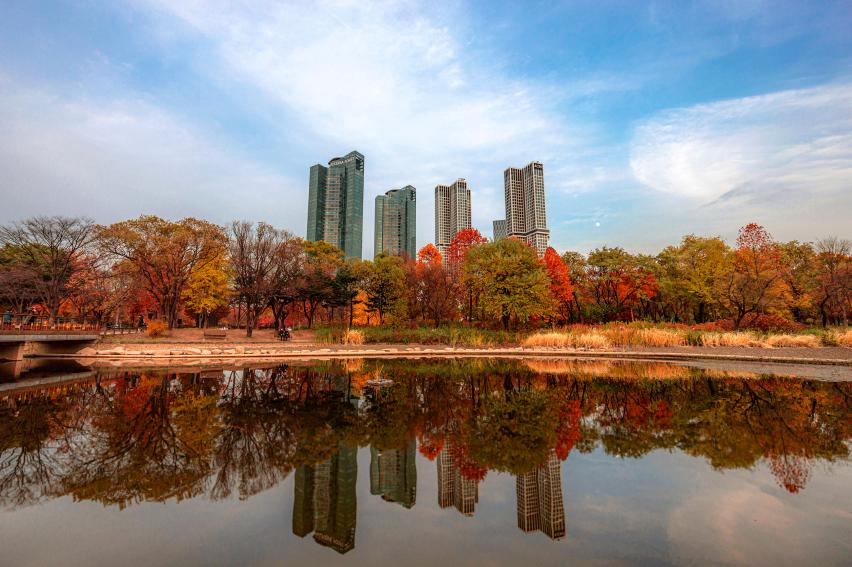
Choose your kind of afternoon
Want to see Seoul’s autumn scenery without committing to a mountain hike? We like leaving as much room for a break as for the walk itself. These are four places we’ve visited and recommend: somewhere to stroll in trainers, then stop for coffee or a warm meal.
Pick one, rather than trying to fit all four into a day. Choose by your hotel location and how much you feel like walking. The times below are FLASH KOREA’s suggested outings, including meals, photographs and breaks, not official trail times.
Why this is for you
Each route pairs somewhere to walk with somewhere nearby to pause. Think less about how many sights you can cover and more about where you’d enjoy spending an afternoon.
- Seoul Forest & Seongsu: park and cafés, around 3–4 hours.
- Seochon & Suseongdong Valley: lanes and mountain foothills, around 3–4 hours.
- Olympic Park: open views and a stroll, around 2–3 hours.
- Hongjecheon & Ansan: waterfall and woodland, around 3–4 hours.
Seoul Forest & Seongsu: a walk, then coffee
When you want greenery without giving up a good café stop, we recommend Seoul Forest (서울숲). Split your time between the park and the neighbourhood for a different kind of Seongsu (성수) afternoon from shopping alone.
Route: Seoul Forest Station → Seoul Forest → nearby lanes → lunch or coffee.
You don’t have to cover the whole park. Check the map at the entrance, take your time around the walking paths and Family Field, and sit wherever you fancy. Allow roughly 60–90 minutes for walking, then head outside the park for a meal or a café.
Trying to cover several parts of Seongsu adds distance. Stay near the park for an easy day; extend towards Seongsu Station only if you want to shop too.
- Getting there: Seoul Forest Station, Suin–Bundang Line, Exit 4. Ttukseom Station, Line 2, Exit 8 is another option.
- An easier walk: stick to a short circuit inside the park if you want to avoid slopes. This is not a guarantee of wheelchair or pushchair access along every part of the route.
- With children: a short park walk and one café stop work well. Separate facilities, including the Insect Plant Garden, have their own hours and closing days.
Seochon & Suseongdong Valley: where the lanes meet the mountain
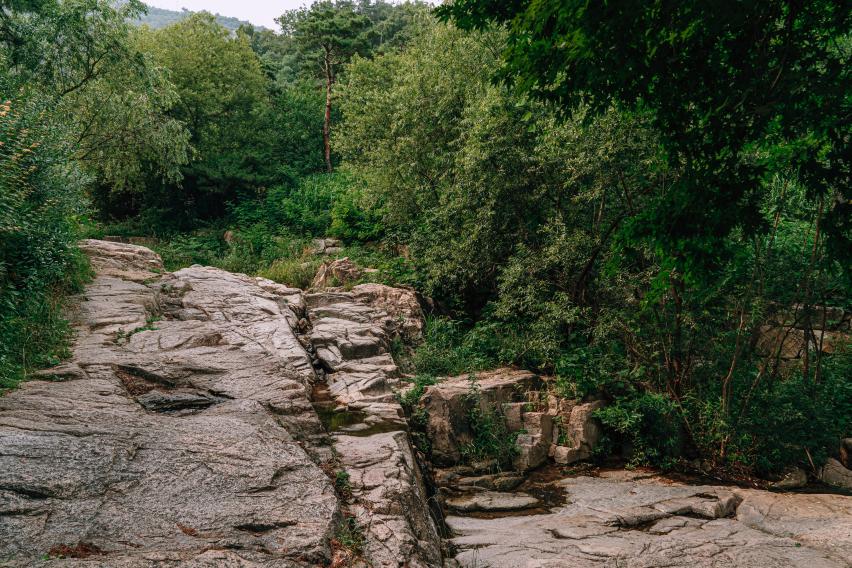
For neighbourhood lanes with a mountain backdrop, we recommend Seochon (서촌). Start at Gyeongbokgung Station, walk through the lanes to Suseongdong Valley (수성동계곡), then come back down for a meal or tea.
Route: Gyeongbokgung Station → Seochon lanes → Suseongdong Valley → food and a break in Seochon.
The valley sits at the foot of Inwangsan (인왕산). Part of the pleasure is watching the neighbourhood give way to rocks, trees and mountainside. You can enjoy Seoul’s close connection between city and mountain without adding a summit climb.
This is not a flat park walk: the approach has uphill sections. Take them slowly and save your meal or café stop for the way down. Water levels vary with weather and season, so don’t expect a flowing stream every time.
- Getting there: Gyeongbokgung Station, Line 3. To reduce the walk, official tourism guidance suggests village bus Jongno 09 to the Park No-soo Art Museum stop, then continuing towards the valley.
- Map search: 수성동계곡 / 185-3 Ogin-dong, Jongno-gu, Seoul.
- Access: free and listed as open around the clock. Our suggested outing is for daylight hours.
- Choosing a route: if your knees trouble you or you want to avoid climbs, consider a short Seoul Forest walk instead. Keep voices down in Seochon’s residential lanes and avoid photographing inside homes.
Olympic Park: slow down under an open sky
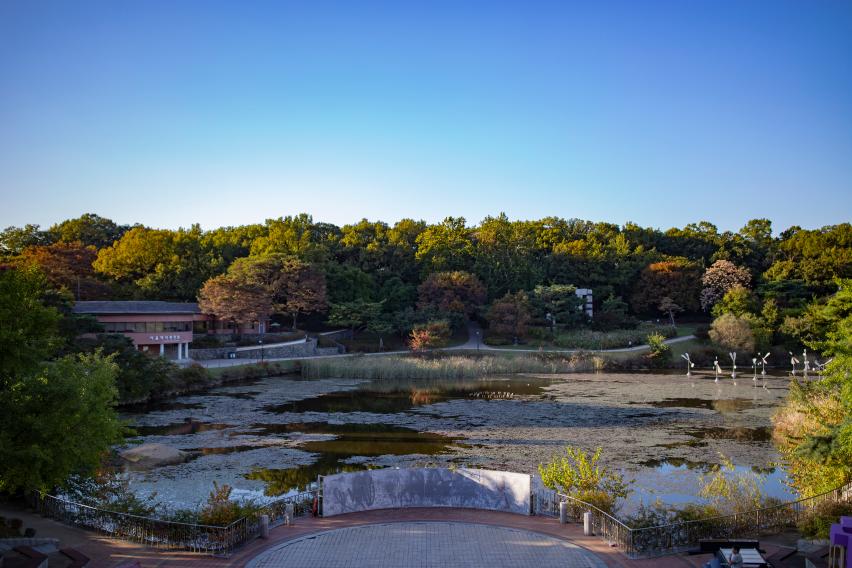
If you’d rather spend time outdoors than browse shops, Olympic Park (올림픽공원) is a good choice. Let the lake, sculptures and scenery around the earthen fortifications set a slower pace.
Route: Mongchontoseong Station → World Peace Gate area → a walk beside Mongchon Moat → return to the same entrance.
The park is large, so chasing every landmark can make a quiet outing feel rushed. Focus on one area, such as the World Peace Gate and Mongchon Moat, and leave time to sit. A short walk can still become a leisurely half-day.
Bring a small picnic mat. On an open lawn, you can read, chat or simply do very little under the autumn sky. That is one of our favourite ways to enjoy the park.
Lawns open in rotation and may close for grass care or events. Use an open area and follow the signs. Picnic mats are different from shade shelters and tents, which are not allowed; cooking is also prohibited. Take your rubbish home.
For a gentler walk, skip the climb onto the earthen ramparts. Adding places such as the Alone Tree changes the distance and gradients. Choose your return entrance before collecting landmarks.
- Getting there: Mongchontoseong Station, Line 8, Exit 1. Olympic Park Station on Lines 5 and 9 serves a different side of the park.
- Access: general park entry is free. Pedestrian access is 05:00–22:00, with plaza areas open until 24:00. Performances, exhibitions and other separate facilities have their own arrangements. Times are KST.
- Route note: the operator has posted construction restrictions affecting parts of Peace Square and the waterside stage area. We suggest a short out-and-back on open paths, rather than a fixed loop through restricted areas.
Hongje Waterfall & Ansan: from the water to the woods
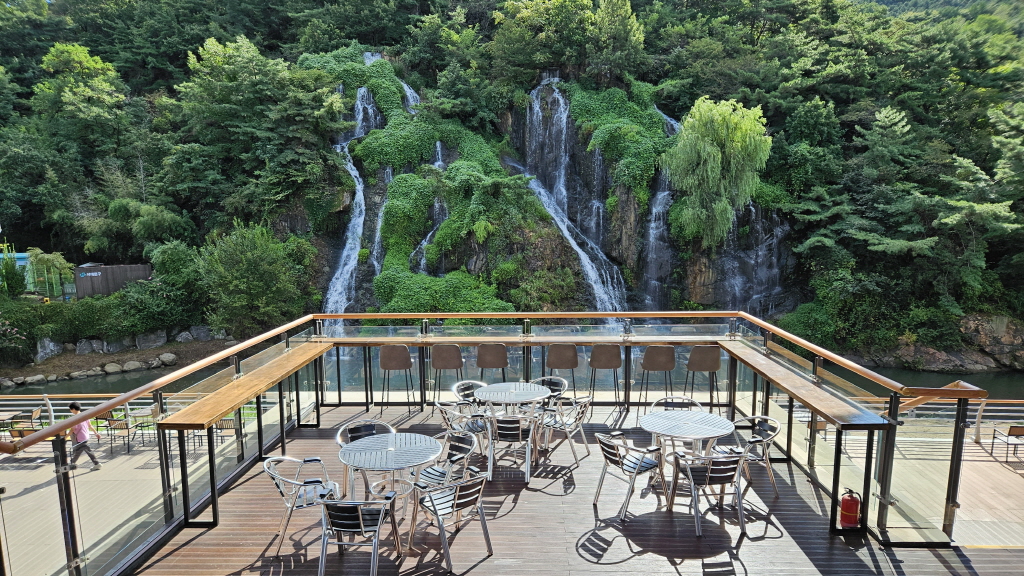
For a waterfall and woodland in one outing, start at Hongje Waterfall (홍제천폭포) and continue towards Ansan (안산). This is our pick when you feel like a slightly longer walk. See the artificial waterfall beside Hongjecheon, pass Yeonhui Forest Shelter (연희숲속쉼터) and join part of Ansan Jarak-gil (안산 자락길). This Ansan is the mountain in Seodaemun-gu, Seoul, not Ansan city in Gyeonggi-do.
Route: Hongje Waterfall → Yeonhui Forest Shelter → part of Ansan Jarak-gil → return the same way → a break at CAFE 폭포.
Look around the waterfall first, then head towards the forest shelter. Walk along Jarak-gil for around 30–40 minutes before turning back. Returning to your starting point keeps the outing manageable and makes the café stop simpler.
The full circular Jarak-gil trail is about 7 km. We recommend only part of it, not a full circuit. If you want to walk all the way round, Seodaemun-gu’s official suggested itinerary allows about three hours for the trail alone; waterfall viewing and café time are extra.
We haven’t included the climb to Bongsudae at Ansan’s summit. The hillside trail and summit hike are different choices. Approaches from the waterfall may have slopes or steps: Jarak-gil’s barrier-free design does not mean every connecting path is level.
- Suggested time: around 3–4 hours for the waterfall, a partial out-and-back walk and a café break. This is our editorial estimate and varies by pace and chosen section.
- Public transport: Visit Seoul lists village buses Seodaemun 09 and 10 from Hongje Station, Line 3, and buses 163 and 7720 from Hongik University Station. The waterfall is not immediately outside Hongje Station; allow time for the bus.
- Café stop: CAFE 폭포 / 262-24 Yeonhui-ro, Seodaemun-gu, Seoul. Official tourism guidance lists 09:00–21:00 daily, year-round (KST). These are café hours, not waterfall operating hours.
- Waterfall operation: we could not confirm daily running times from the sources checked. Plan to enjoy the streamside and forest too, rather than relying on the waterfall always flowing.
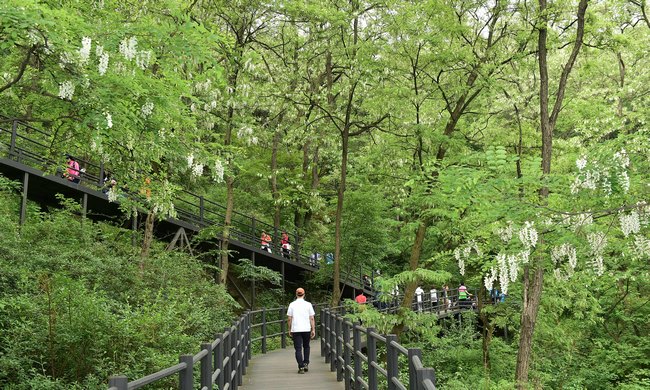
A little planning goes a long way
Choose an afternoon that fits your plans, rather than chasing a promised foliage peak. Trees colour at different times depending on species and temperature. This guide does not guarantee this year’s peak or the foliage on a particular date. We chose places that are enjoyable even while some leaves are still green.
One meal and one break are enough. Walk during daylight and finish before dark, rather than filling every hour. Bring layers, comfortable trainers and water. Slow down on wet leaves and stone paths after rain.
For an evening plan, browse What’s On for current and upcoming events, including Marché markets. Leave enough travel time if you add an event to your walk.
Sources and photo credits
Checked on 18 October 2026 (KST). Recommendations draw on FLASH KOREA’s visits; practical details were checked against official guidance. Suggested durations include meals and breaks and are editorial estimates.
Photos are official material from Seoul Tourism Organization and Seodaemun-gu, not photographs of our visits or evidence of current foliage. The Seoul Forest and Olympic Park images show autumn; the Suseongdong Valley image is a location reference. Capture dates are not stated in the source pages.
Seoul Tourism Organization’s three photos are released under Korea Open Government License (KOGL) Type 1, requiring attribution. Seodaemun-gu’s waterfall and Ansan photos are KOGL Type 3, requiring attribution and prohibiting alterations. They are used without cropping or editing and displayed proportionally. Individual source pages and the applicable terms are linked below.
- Seoul Metropolitan Government: Seoul Forest (Korean)
- Visit Seoul: Suseongdong Valley (English)
- Olympic Park: lawn rules (Korean)
- Olympic Park: visitor information (Korean)
- Olympic Park: transport (Korean)
- Olympic Park: notices and construction (Korean)
- Seodaemun-gu: Ansan Jarak-gil route (Korean)
- Visit Seoul: Yeonhui-dong and CAFE 폭포 (Korean)
- Seoul Tourism Organization · Autumn trees and reflections in a pond at Seoul Forest
- Seoul Tourism Organization · Rocks and wooded foothills at Suseongdong Valley
- Seoul Tourism Organization · Autumn colours around Mongchon Moat in Olympic Park
- Seodaemun-gu · The CAFE 폭포 terrace facing Hongje Waterfall
- Seodaemun-gu · A deck walking path through the trees on Ansan Jarak-gil
- Seoul Tourism Archive: copyright policy / KOGL Type 1
- KOGL Type 3: attribution, no alterations
Last checked: 2026-10-18
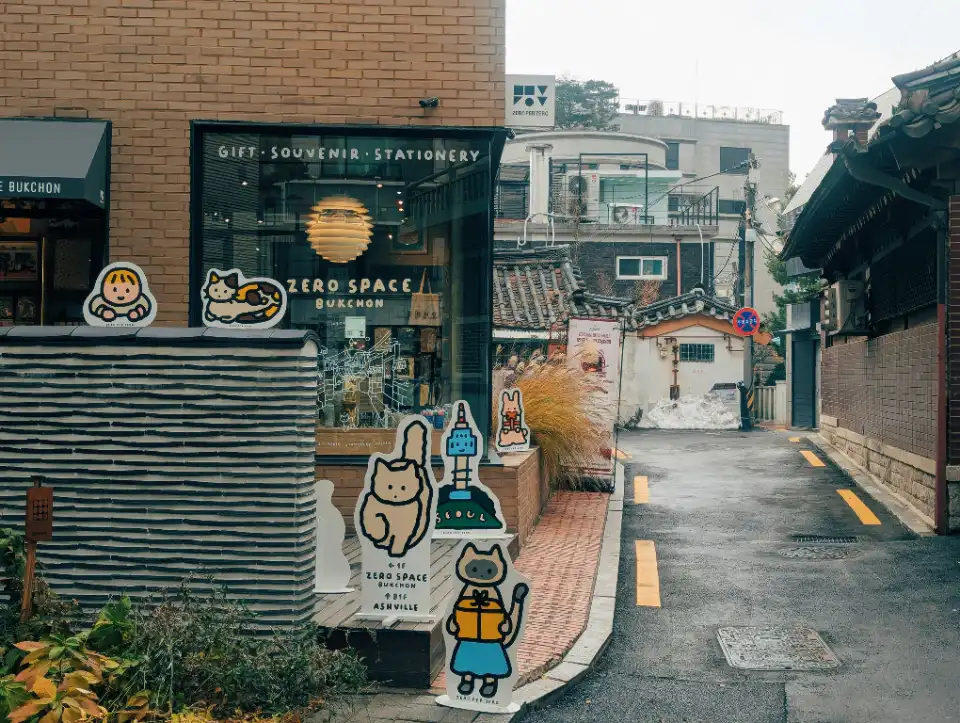
A slow day in Bukchon: lunch, coffee and little shops
Take your time around Anguk Station with rice balls at Yibap, coffee at Tonti, a photo stop, Korean design finds and a stroll through Jeongdok Library’s garden.
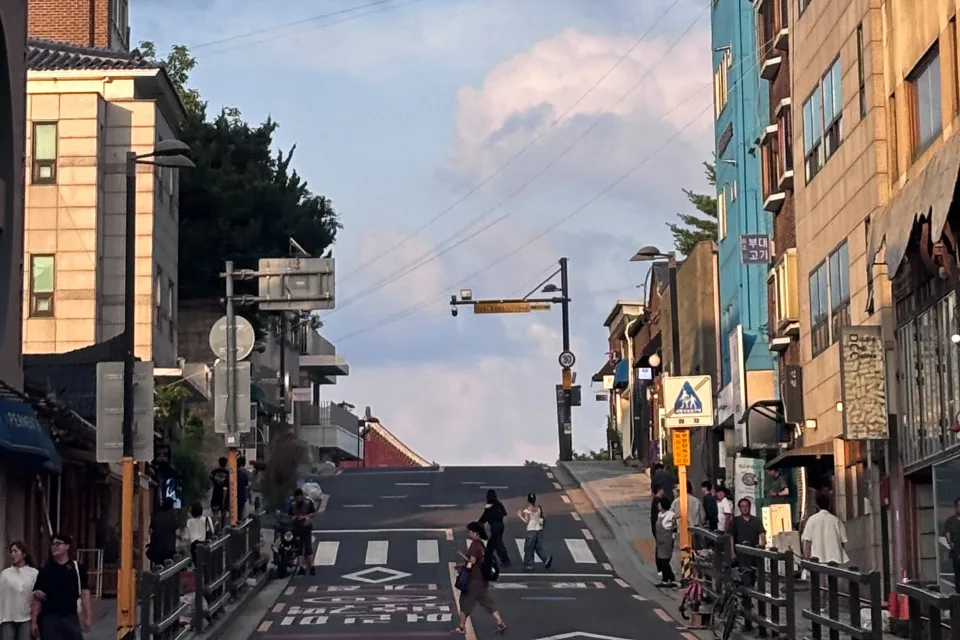
Seoul Named the World’s Best Big City: Five Ways We Love to Explore It
Coffee in Bukchon, hot bindaetteok at Gwangjang Market and an unhurried afternoon by the Han River. Curious about Seoul? Start with a day like this.

5 Photo Studios and Booths to Try in Jongno, Seoul
Find a photo experience in Seochon, Bukchon, Gwanghwamun or Daehakro, with addresses, booking methods and the differences between booths and studio sessions.
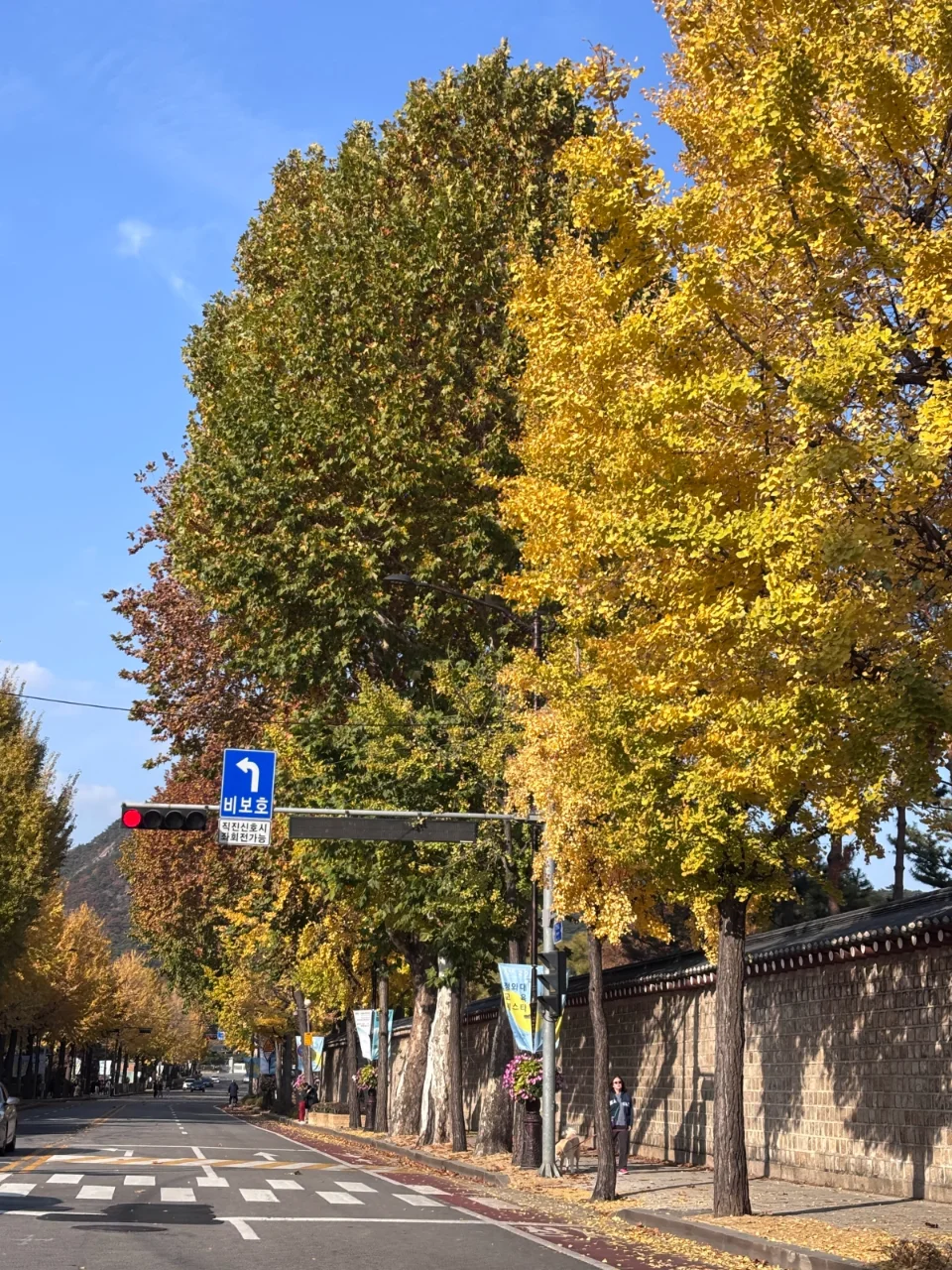
4 Ginkgo Walks in Jongno: Gyeongbokgung, Seochon and Beyond
Find autumn ginkgo scenery around Gyeongbokgung, Hyoja-ro, Samcheong-dong and Myeongnyundang, with November hours and simple route ideas.